
How Long Do Tomatoes Last on the Counter?
Counter storage keeps flavor intact — here's the day-by-day breakdown.
Tomatoes last 5–7 days on the counter at room temperature, stem-side down.
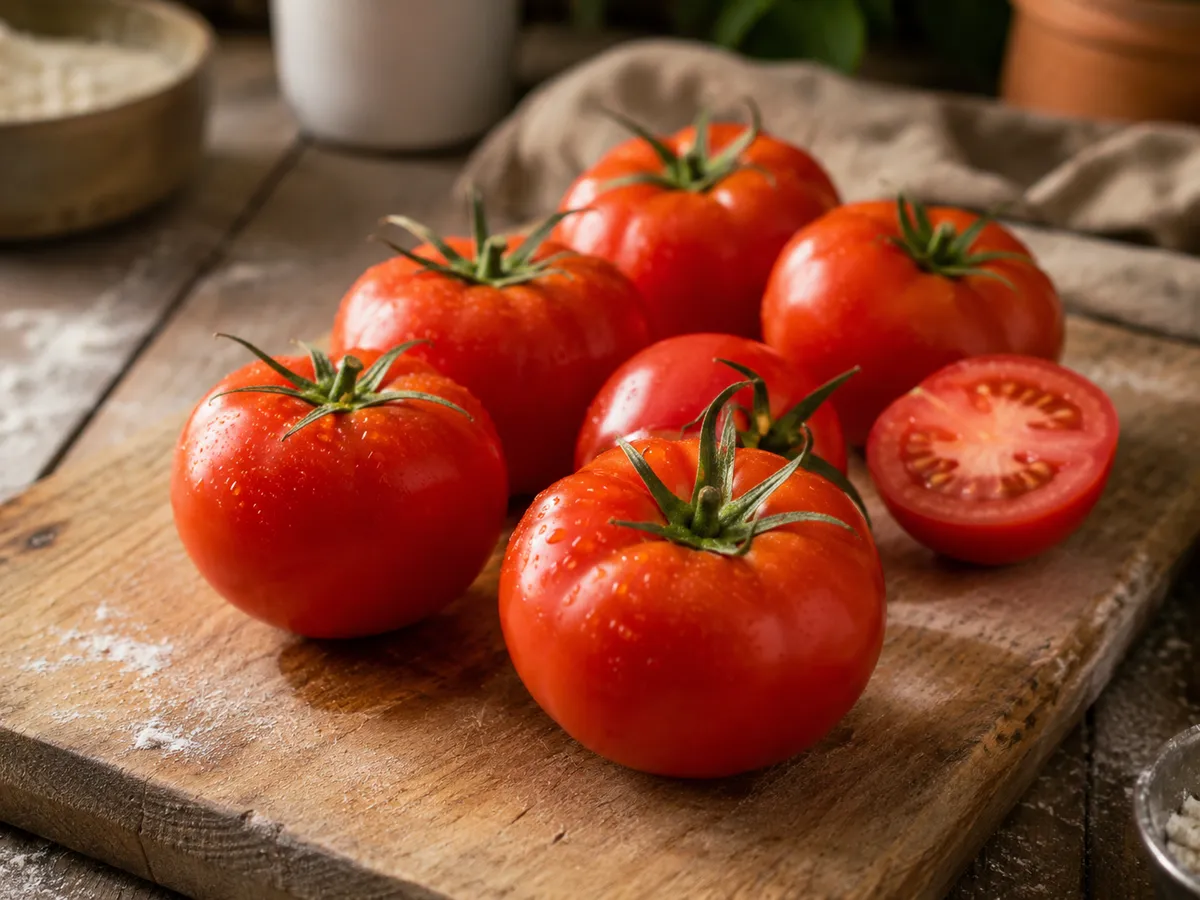
Tomatoes are one of those foods where storage method genuinely changes the eating experience. Refrigerating tomatoes halts the enzymatic ripening that builds flavor and aroma, leaving you with a mealy, bland result. Counter storage — ideally between 55–70°F, away from direct sunlight — keeps tomatoes tasting like tomatoes. The tradeoff is a shorter window: roughly 5–7 days before softening and splitting become real concerns. This guide walks through each stage of that window so you know exactly when to eat, cook, or compost your tomatoes.
Heads up: shelf-life ranges are estimates based on home storage. We make no guarantee of accuracy. When unsure, throw it out.
The full timeline
Day 1–2 (Peak Fresh)
1–2 days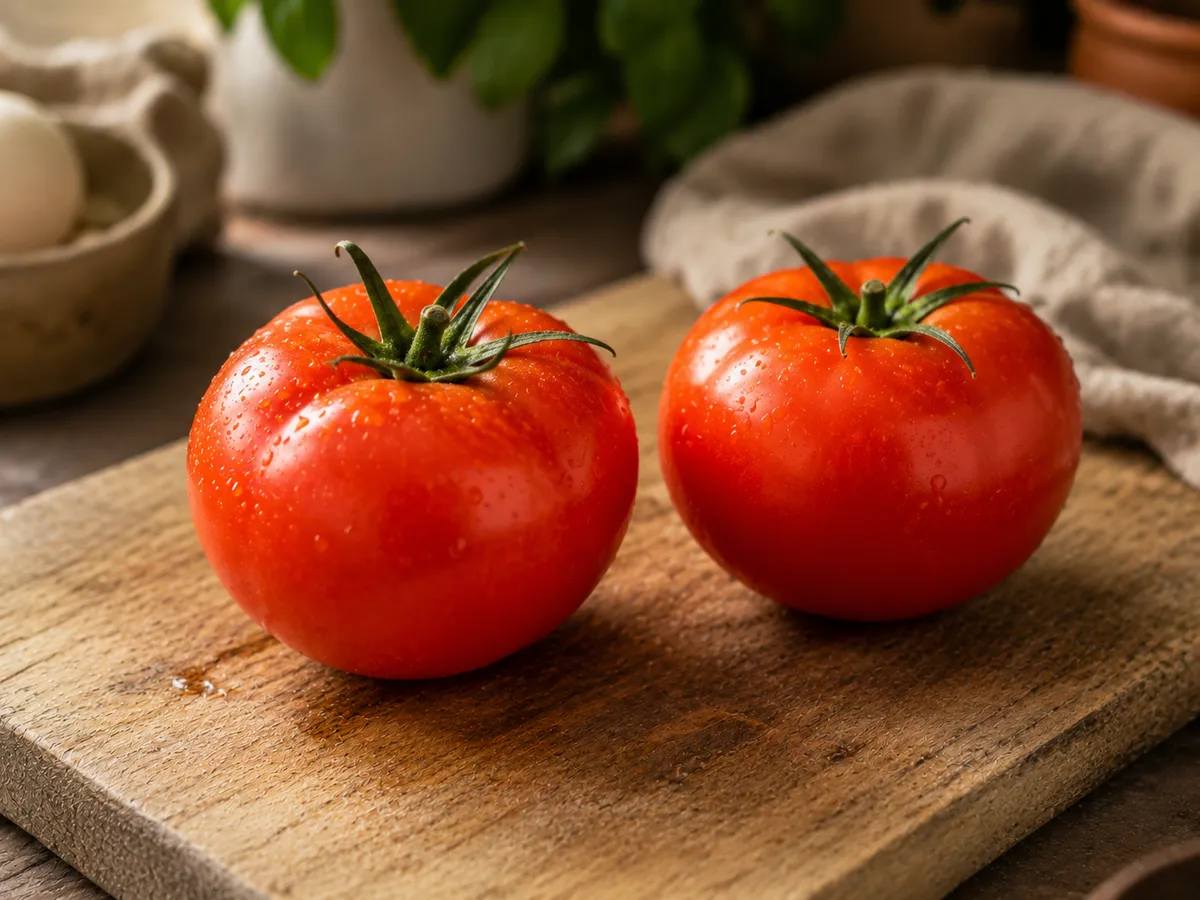
- Skin taut and glossy with no give when gently pressed
- Deep red, orange, or yellow color uniform across the surface
- Fresh, grassy-sweet aroma at the stem end
- Stem scar dry and intact
- Eat raw in salads or on toast
- Slice for sandwiches or caprese
- Store stem-side down on the counter away from sunlight
Day 3–4 (Fully Ripe)
3–4 days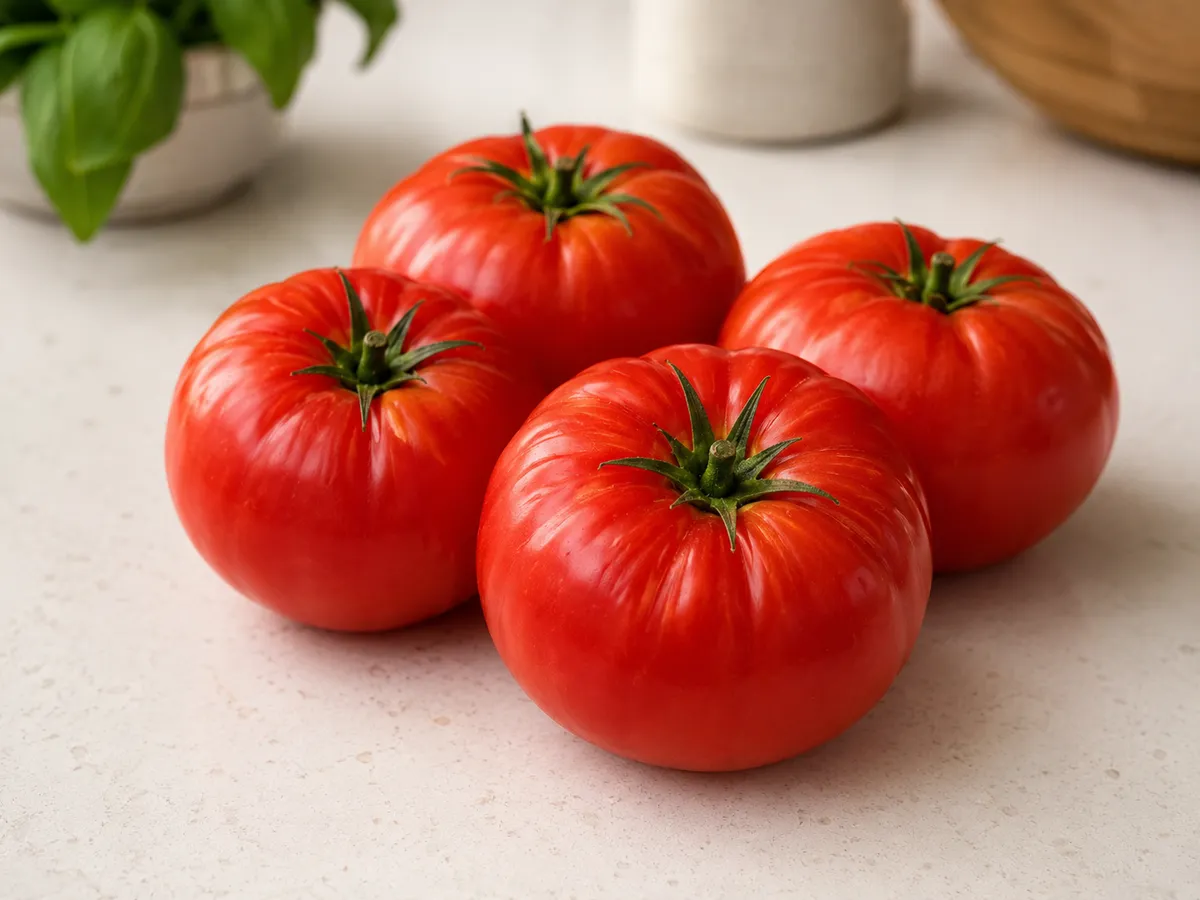
- Slight give when pressed at the equator — not mushy
- Color deepened and fully developed
- Aroma noticeably sweet and rich
- Skin may show faint surface wrinkles near the stem
- Eat raw — flavor is at its richest
- Roast or cook into sauce to extend usability
- Refrigerate if you need 1–2 extra days (accept some texture loss)
Day 5–7 (Softening)
5–7 days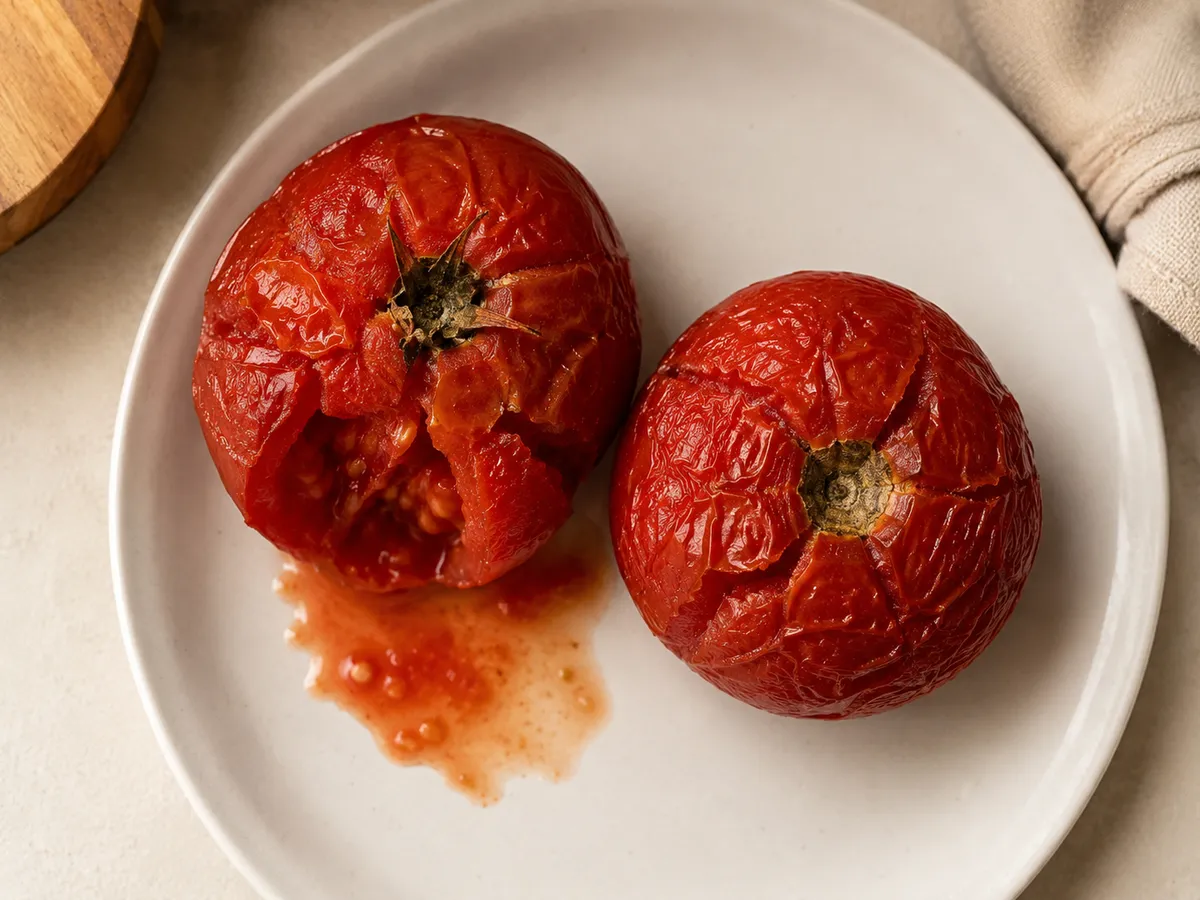
- Noticeably soft when pressed, especially at the blossom end
- Skin may pucker or crack slightly
- Juices pool if cut — flesh breaks down quickly
- Smell remains tomato-like but may have a faint fermented edge
- Cook immediately into sauce, soup, or stew
- Roast whole at high heat to concentrate flavor
- Inspect closely and cut away any split or discolored sections before using
- Toss if any mold or off odor is present
Day 8 (Spoiled)
8+ days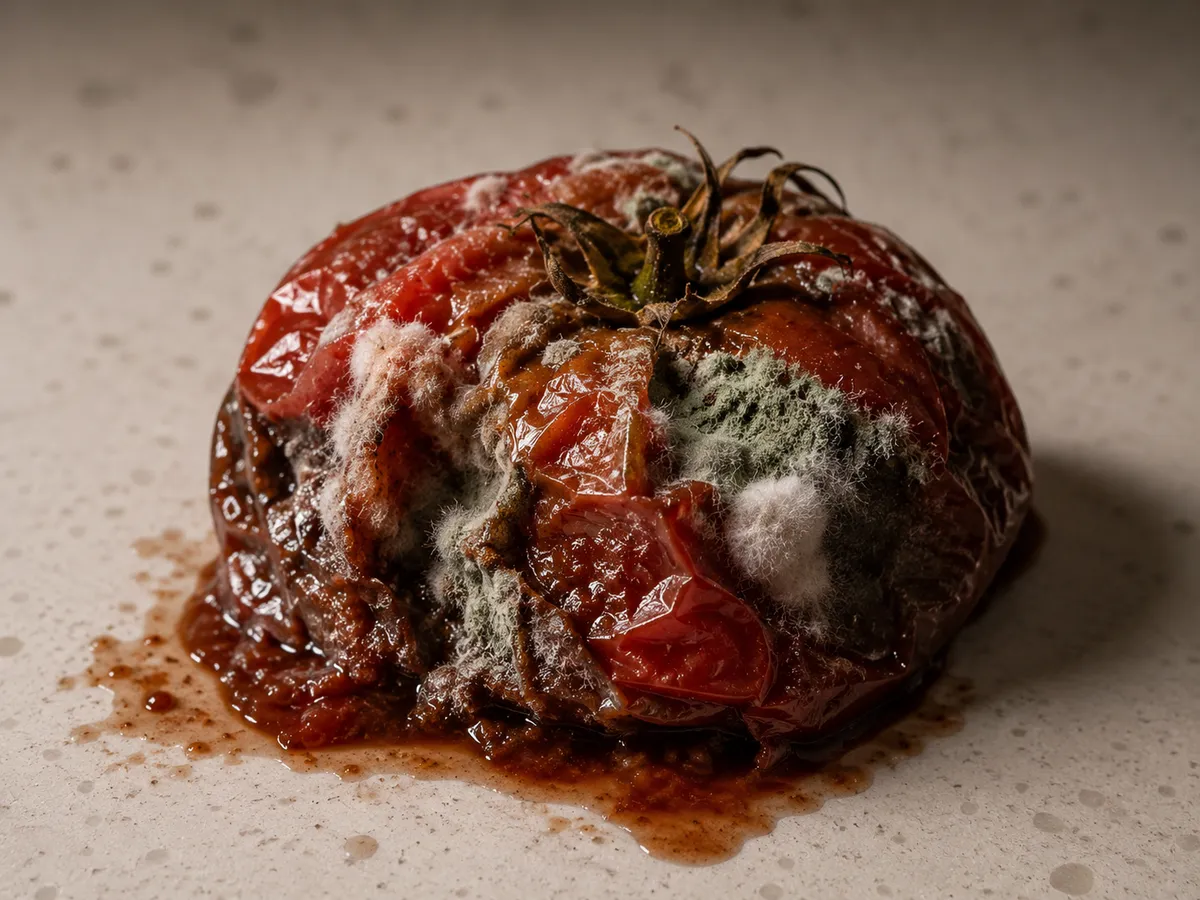
- Collapsed or leaking — flesh has broken down into mush
- Visible white, gray, or green mold on skin or at cracks
- Sour, fermented, or rotten odor
- Discolored dark patches spreading across the surface
- Discard immediately
- Compost if no pesticide concerns
Common questions
Should I refrigerate tomatoes to make them last longer?
Refrigeration extends shelf life to 1–2 weeks but damages flavor and texture. Cold temperatures halt the ripening enzymes that create aroma compounds, leaving tomatoes mealy and bland. Refrigerate only if a tomato is fully ripe and you need extra time — then let it come to room temperature for 30 minutes before eating. Sage's Verdict: counter first, fridge as a last resort.
Can I store cut tomatoes on the counter?
No. Once cut, tomatoes must be refrigerated in an airtight container and used within 2 days. The exposed flesh is vulnerable to bacterial growth at room temperature.
Does stem-side down storage actually matter?
Yes. The stem scar is the most porous part of the tomato. Storing stem-side down slows moisture loss and limits the entry point for mold and bacteria, meaningfully extending counter life.
Can I freeze tomatoes?
Yes — though texture becomes very soft after thawing, making them suitable only for cooked applications. Freeze whole or chopped in airtight bags for up to 3 months. Blanching first is optional but helps preserve color.
Is it safe to cut off a moldy spot and eat the rest?
Not recommended for tomatoes. Unlike hard produce (carrots, firm cheese), tomatoes have high moisture content and soft flesh. Mold roots (mycelia) penetrate well beyond the visible spot. Discard the whole tomato.
Why did my tomatoes ripen unevenly?
Uneven ripening is usually caused by temperature fluctuations, ethylene exposure from nearby fruit, or the tomato's own variety. Store tomatoes away from bananas and apples, which emit high levels of ethylene gas and can over-accelerate ripening.

Tomatoes reward patience and punish the fridge. Keep them on the counter, stem-side down, out of direct sun — and cook the soft ones before they cross the line.