
How to Tell If Avocados Have Gone Bad
From rock-hard to perfectly ripe to past it — here's what to look for at every stage.
Avocados last 3–5 days on the counter, depending on ripeness when purchased.
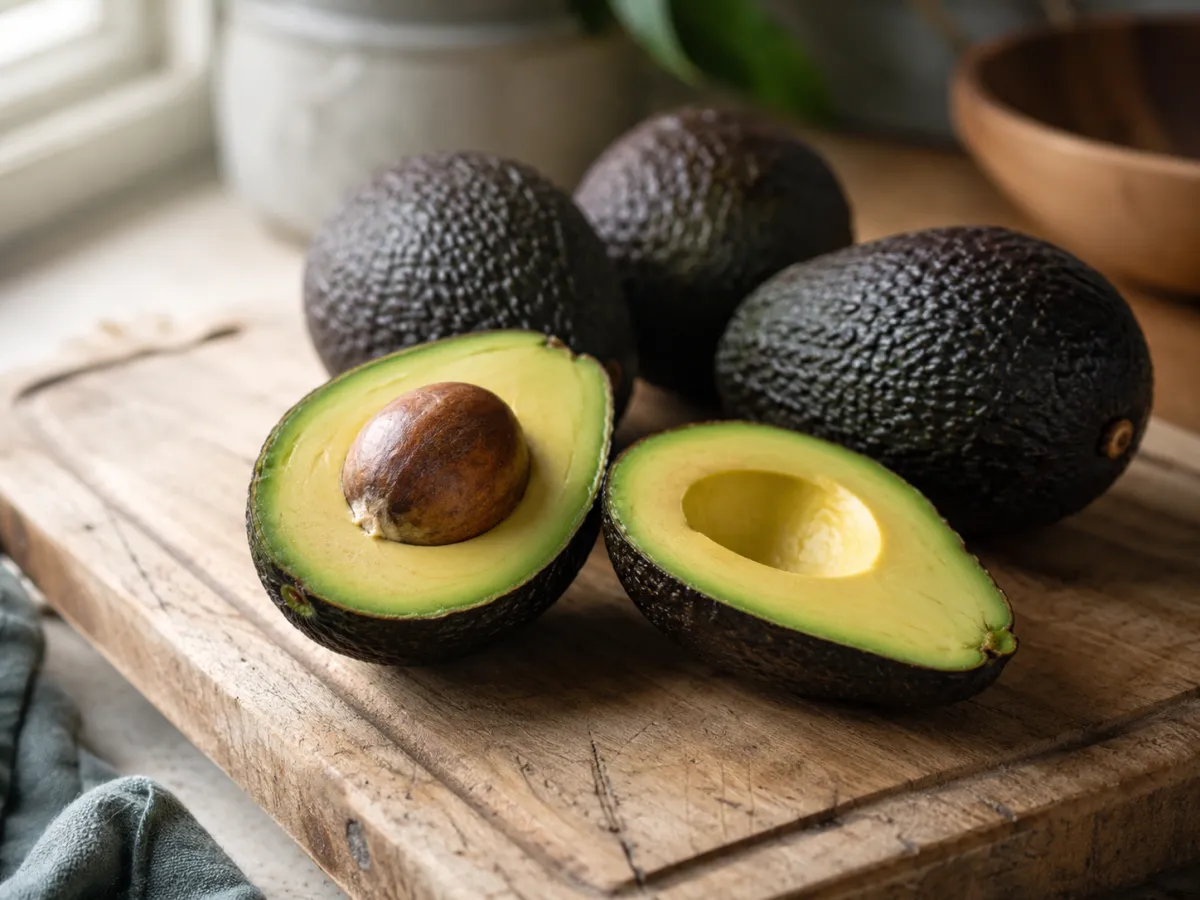
Avocados are one of the more dramatic fruits in the produce aisle — one day they're a dense green rock, the next they're silky perfection, and roughly 36 hours after that they're a brown, stringy disappointment. Knowing how to tell if avocados have crossed the line between "needs one more day" and "needs the bin" can save you money and a lot of sad toast. This guide walks through every visual, tactile, and olfactory cue from the moment you bring avocados home to the point where no amount of optimism will help.
Heads up: shelf-life ranges are estimates based on home storage. We make no guarantee of accuracy. When unsure, throw it out.
The full timeline
Day 1–2 (Firm And Unripe)
1–2 days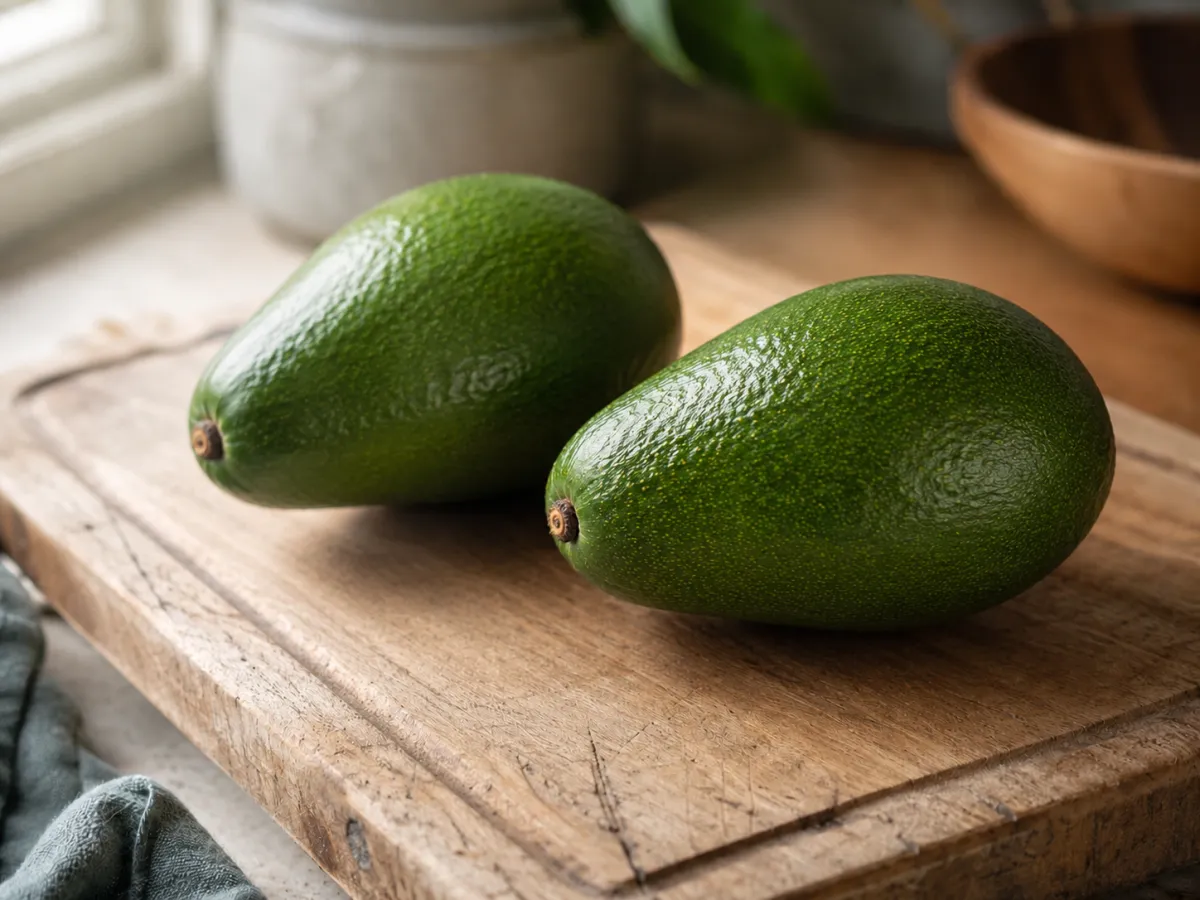
- Skin is bright green or dark green with no give when squeezed
- Flesh, if cut, is pale yellow-green and very firm
- No aroma detectable at the stem end
- Stem nub is tight and does not flick off easily
- Leave on counter at room temperature to ripen
- Place in a paper bag with a banana to speed ripening
- Do not refrigerate yet — cold halts ripening at this stage
Day 3–4 (Peak Ripe)
3–4 days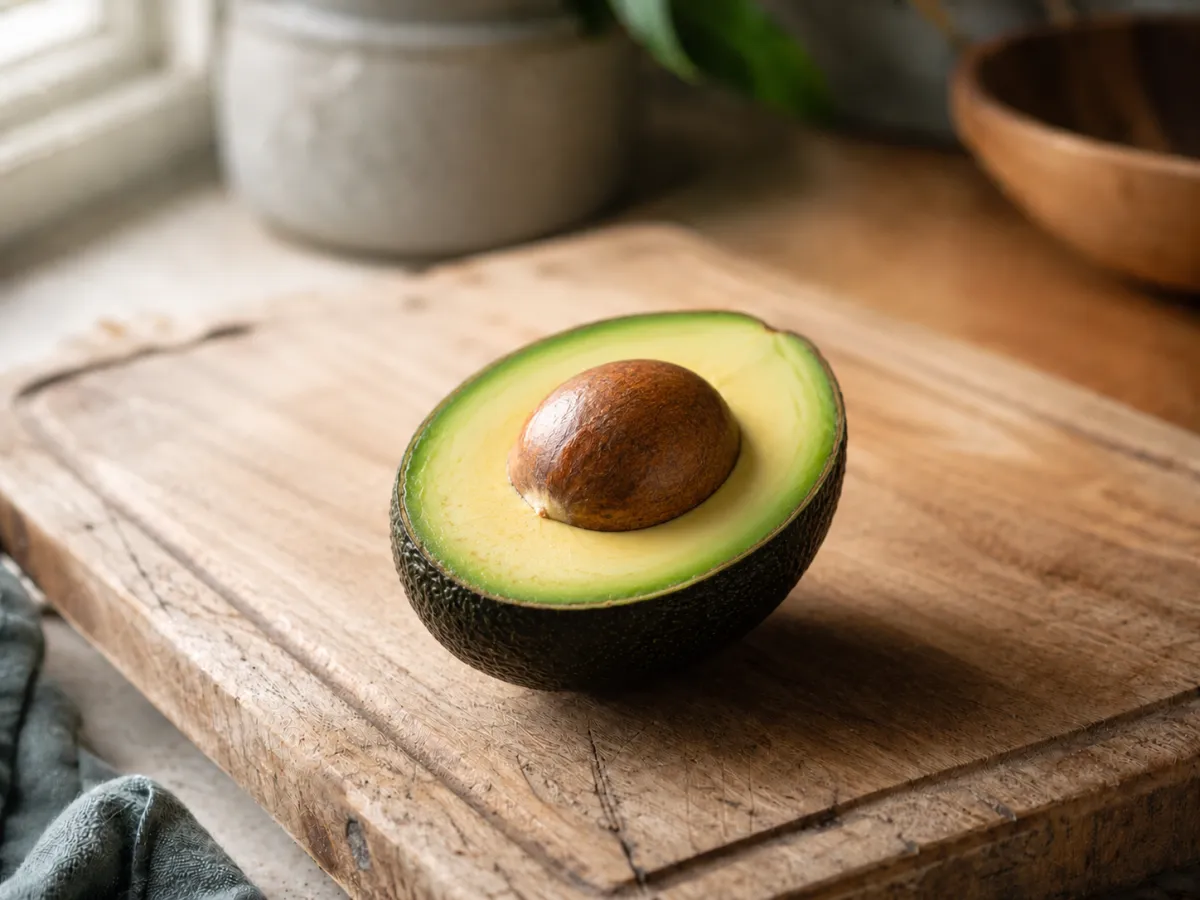
- Skin has turned dark purple-black or deep green depending on variety
- Gentle squeeze yields slight give — like pressing a ripe peach
- Stem nub flicks off cleanly to reveal green flesh underneath
- Mild, nutty, grassy aroma at the stem cavity
- Eat immediately — this is peak quality
- Refrigerate whole to extend life by 3–5 more days
- Halve, remove pit, and store cut side down in the fridge if not eating all at once
Day 5 (Overripe)
5 days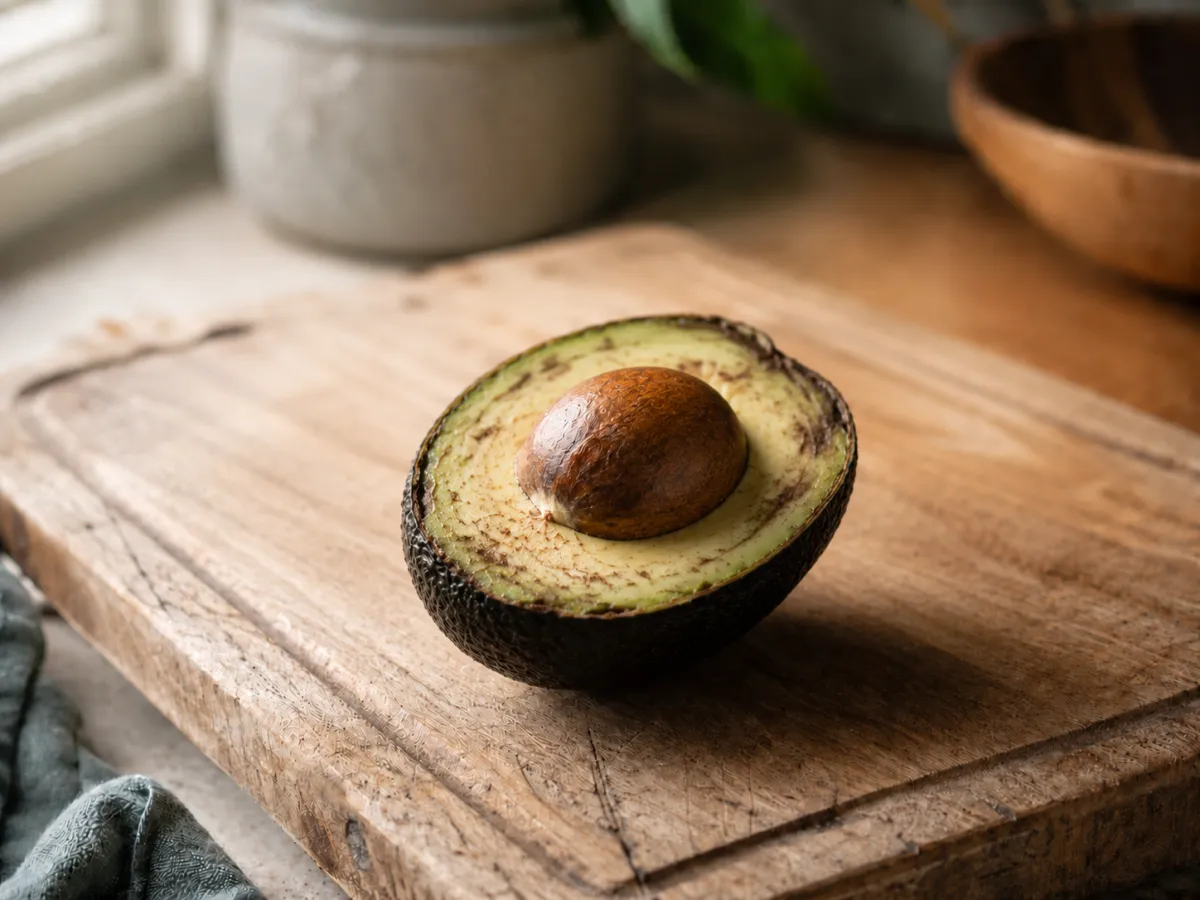
- Skin feels mushy in patches and may show sunken dents
- Stem cavity reveals brownish or grayish flesh when stem is removed
- Flesh has visible brown streaks or oxidized patches throughout
- Aroma is stronger, slightly fermented or sour
- Cut away brown or stringy sections and use the remaining green flesh
- Blend into smoothies or guacamole where discoloration is less noticeable
- Toss if the majority of flesh is brown, mushy, or off-smelling
Day 6–7 (Spoiled)
6–7 days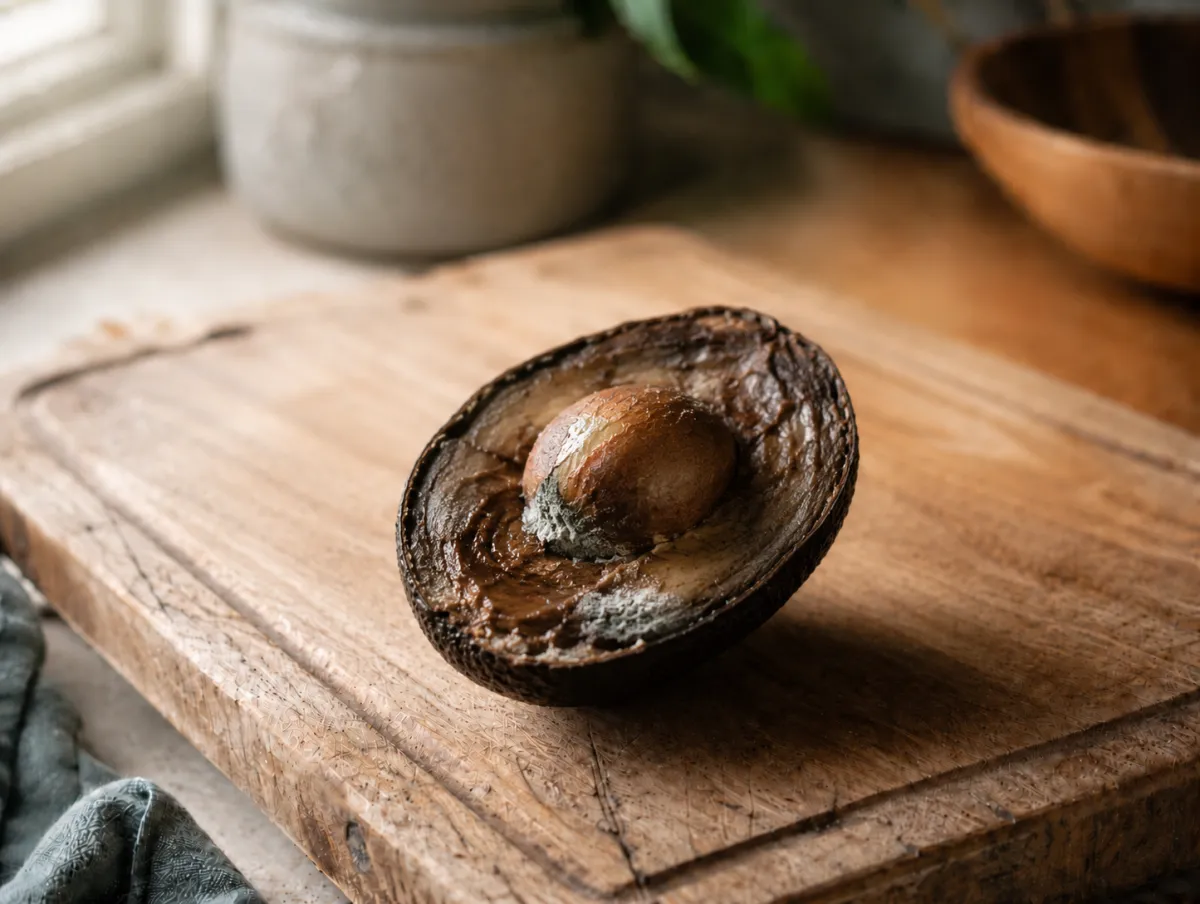
- Skin is deeply sunken, cracked, or leaking dark liquid
- Flesh is uniformly brown, gray, or black with a stringy or watery texture
- Distinct sour, rancid, or alcoholic odor
- Possible white or gray mold visible on flesh or under skin
- Discard — do not eat
- Toss in compost if available
Common questions
Can I eat avocados that have brown flesh inside?
Small brown streaks or spots are usually oxidation, not spoilage — cut them away and the remaining green flesh is fine to eat. If the entire interior is brown, mushy, or smells sour, discard it. Sage's Verdict: brown patches ≠ automatic toss, but use your nose as the final judge.
How do I stop a cut avocado from browning?
Press plastic wrap directly against the flesh to limit air contact, or brush the surface with lemon or lime juice. Store cut avocados in the fridge and use within 1–2 days. Leaving the pit in the half you're saving helps only where the pit physically covers the flesh.
Does the stem trick actually work for checking ripeness?
It's a useful indicator, not a guarantee. Flick the small stem nub off: green underneath suggests ripe, brown suggests overripe, and if it won't budge at all the avocado is still underripe. The squeeze test alongside the stem check gives a more reliable read.
Can I refrigerate avocados to slow ripening?
Yes — refrigerating a ripe whole avocado extends its life to roughly 7–10 days total. Refrigerating an unripe avocado will stall ripening and can cause chilling injury (gray, stringy flesh), so wait until it has at least started to soften before moving it to the fridge.
Can avocados be frozen?
Ripe avocado flesh freezes well for up to 3 months. Mash or purée it first with a little lemon juice, then store in an airtight container or zip bag. Whole or sliced avocados turn watery after thawing and are best used only in blended applications like smoothies or dips.
Why does my avocado have dark strings running through the flesh?
Dark vascular fibers in avocado flesh are caused by stress during growing — drought, temperature swings, or physical damage to the tree. The fruit is still safe to eat; the texture is just unpleasant. It's different from browning caused by oxidation or spoilage.

Avocados reward attention — check the stem, trust the squeeze, and when in doubt, smell it. A 3-day window of perfection is short, but it's reliable.