
How Long Do Potatoes Last in the Pantry?
Pantry storage, sprouting timelines, and when to toss that soft spud
Potatoes last 3–5 weeks stored in a cool, dark pantry away from onions.
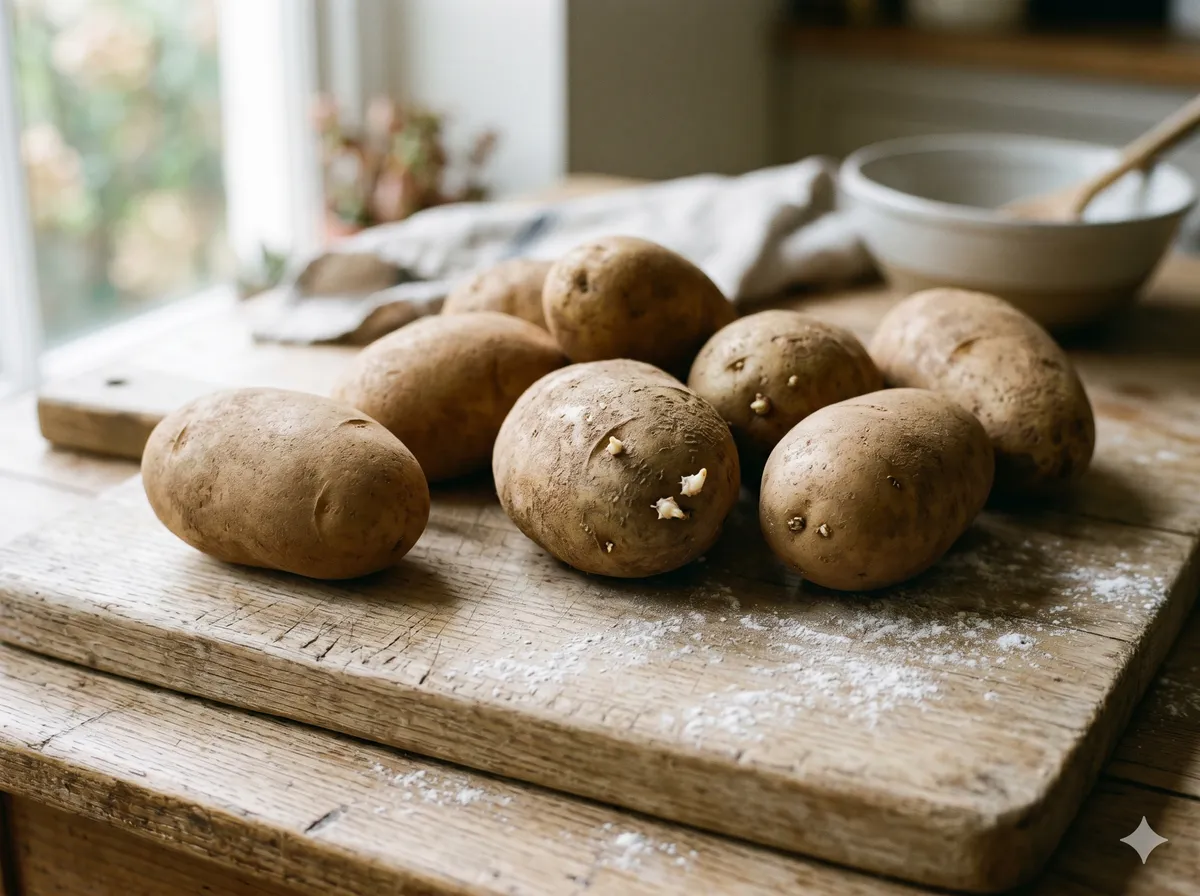
Potatoes are one of the more forgiving items in your kitchen, but "forgiving" has limits. Stored correctly in a cool, dark, well-ventilated pantry, potatoes hold up for 3–5 weeks before quality starts slipping. Temperature, light exposure, and moisture are the three variables that separate a firm, starchy potato from a shriveled, sprouting disappointment. This guide walks through every stage of a potato's pantry life — from peak condition to the point where no amount of peeling is going to save it — so you always know exactly what you're working with before dinner.
Heads up: shelf-life ranges are estimates based on home storage. We make no guarantee of accuracy. When unsure, throw it out.
The full timeline
Day 1–7 (Peak Fresh)
1–7 days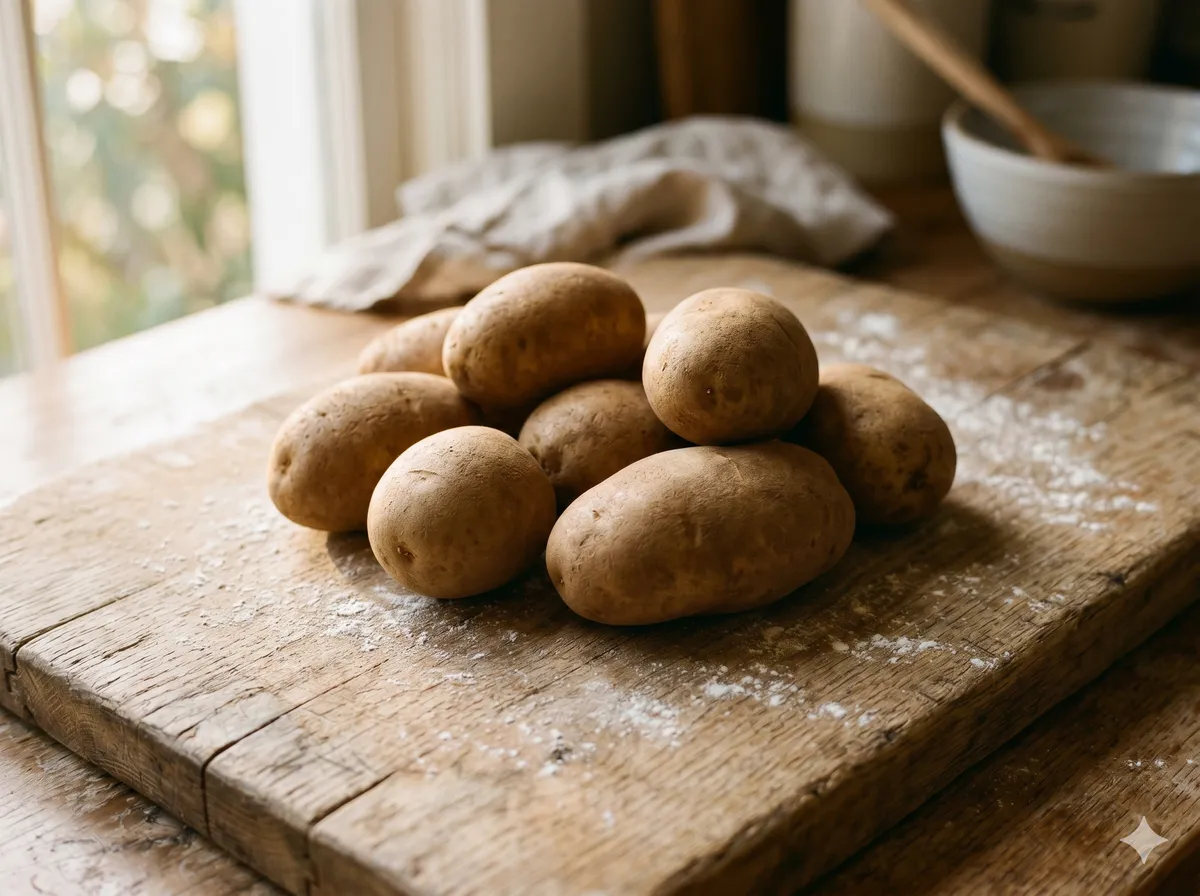
- Skin is firm and taut with no give when pressed
- Earthy, neutral scent — no sweetness or off notes
- No sprouts, green patches, or soft spots
- Surface dry; no excess moisture or stickiness
- Roast, boil, or bake as usual
- Store in a paper bag in a cool, dark spot
- Keep away from onions to slow sprouting
Week 2–3 (Holding Steady)
8–21 days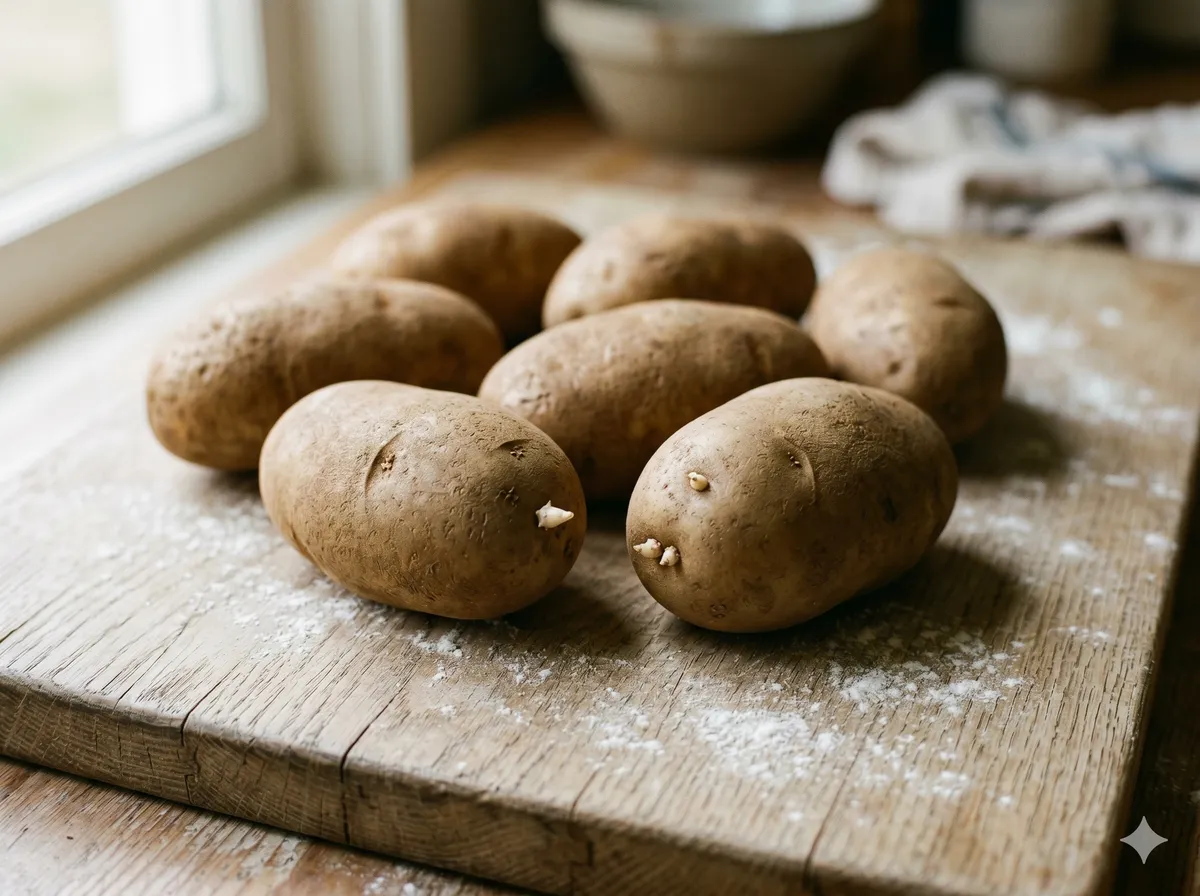
- Skin may show minor scuffing or slight dullness
- Flesh still firm when pressed; no soft zones
- Tiny nub sprouts may be just beginning to form
- Smell remains neutral and starchy
- Snap off any small sprouts before cooking
- Use in soups, stews, or roasted dishes
- Move to front of pantry to use soon
Week 3–4 (Watch Closely)
22–28 days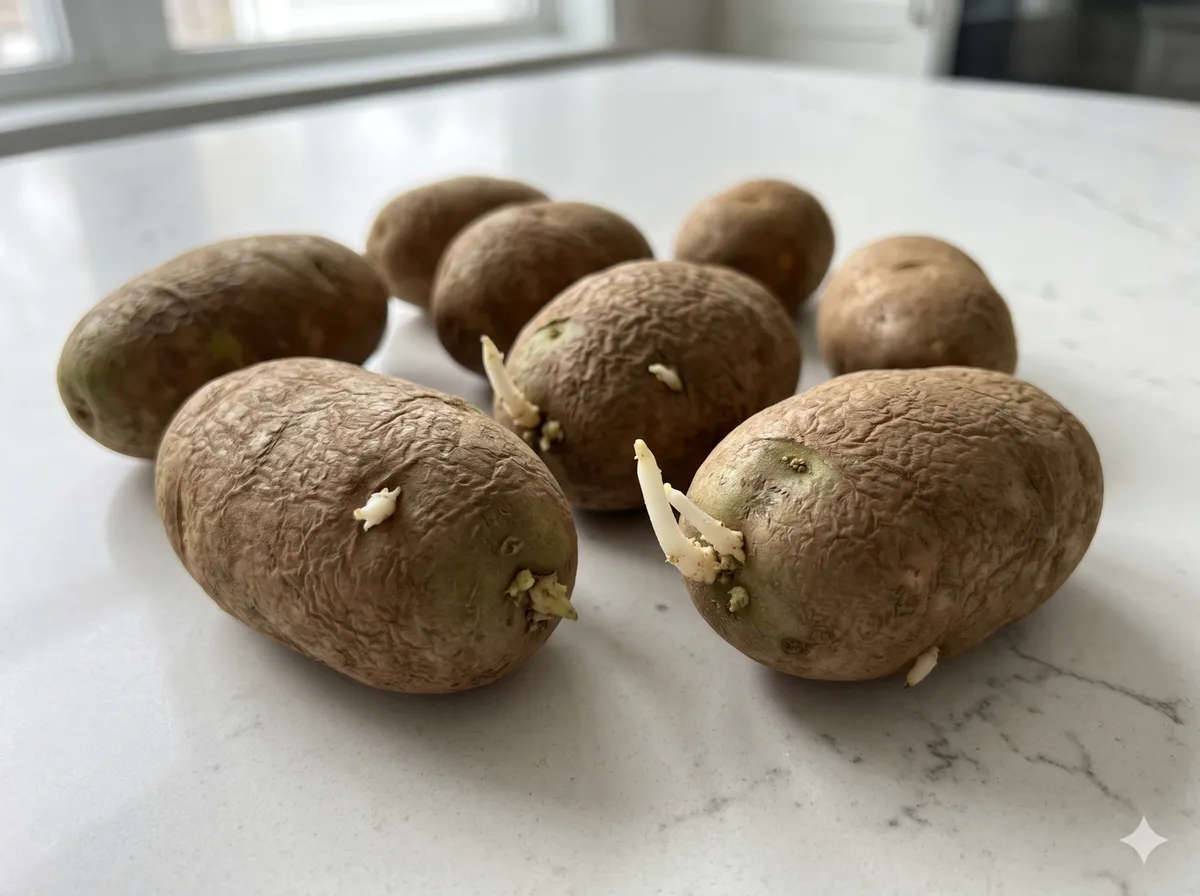
- Noticeable sprouts, 1–2 cm long, at multiple eyes
- Skin feels slightly leathery or beginning to wrinkle
- Minor soft spots possible at one end
- Faint sweet or musty undertone to the smell
- Possible small green patches near the skin surface
- Cut away all sprouts and any green flesh with a wide margin
- Peel deeply to remove green-tinged skin
- Cook thoroughly — do not eat raw at this stage
- Discard if green patches are extensive or soft spots are large
Week 5 (Past Prime)
29–35 days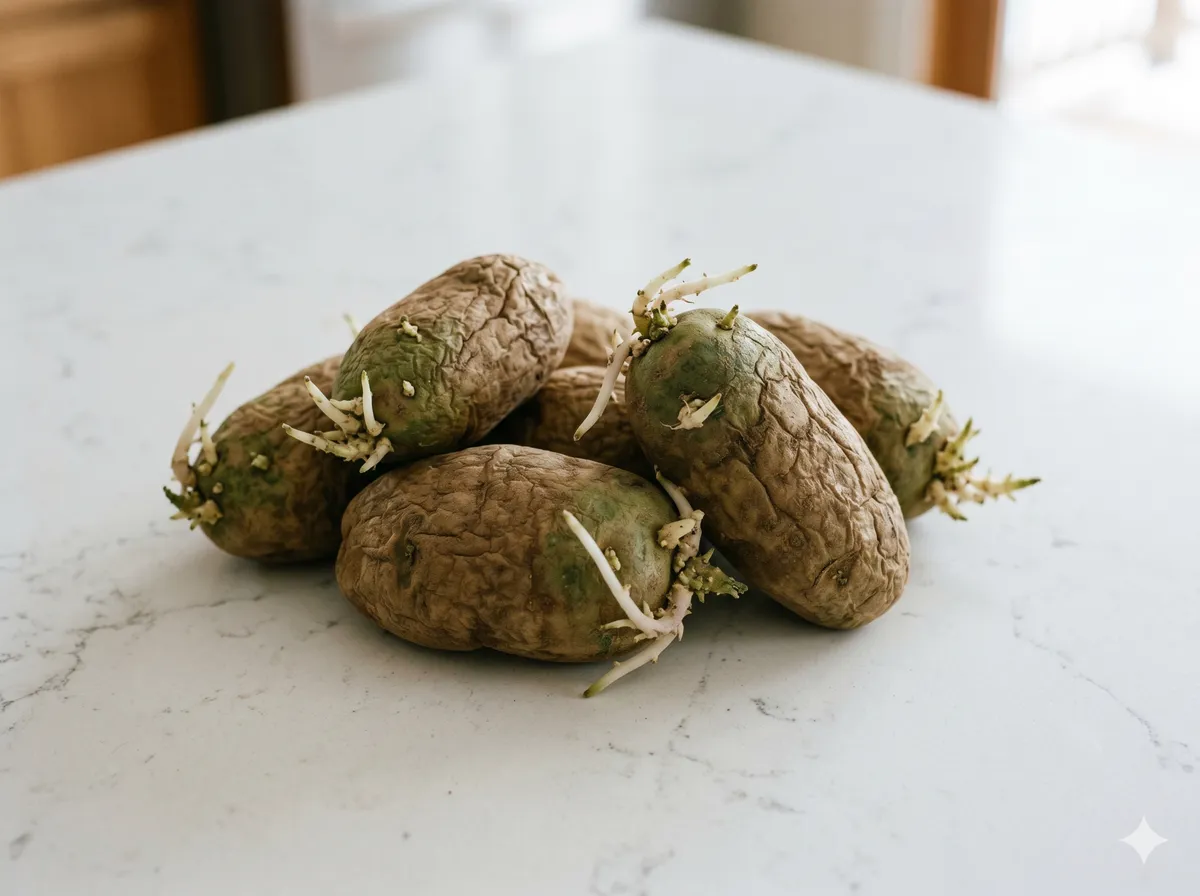
- Skin visibly shriveled and soft throughout
- Long, branching sprouts — several centimeters
- Green discoloration covers significant skin area
- Noticeably sweet or fermented smell
- Flesh may feel hollow or spongy when squeezed
- Discard if more than a quarter of the flesh is green or soft
- If only mildly affected, peel very deeply and cook fully — no raw consumption
- Consider composting to avoid waste guilt
Week 6 (Toss It)
36+ days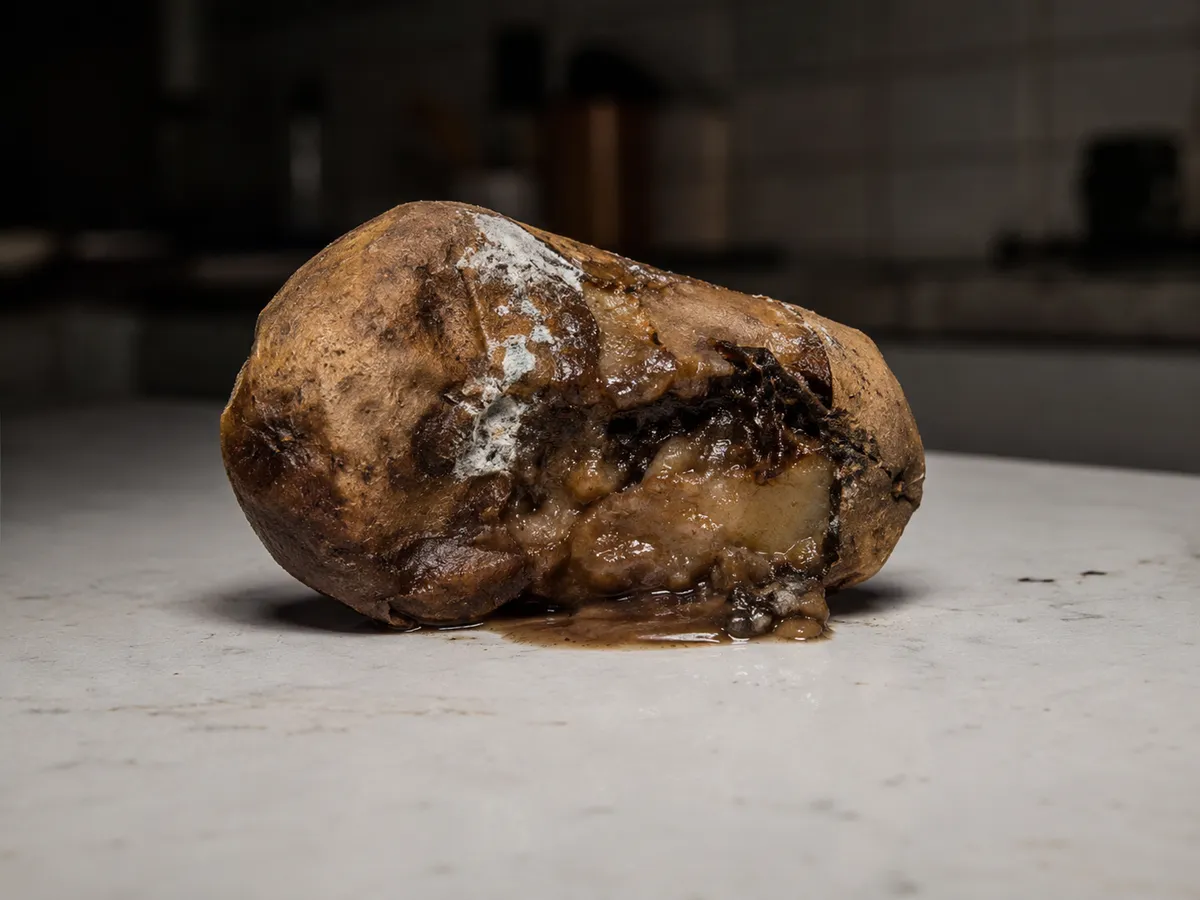
- Flesh is mushy, collapsed, or leaking liquid
- Strong foul, rotten, or fermented odor
- Visible mold — white, gray, or black fuzzy growth
- Green color penetrates deep into the flesh when cut
- Discard immediately
- Do not attempt to cook or eat
- Compost if your bin accepts starchy vegetables
Common questions
Are sprouted potatoes safe to eat?
Small sprouts (under 1 cm) can be snapped off and the potato cooked normally. Longer sprouts indicate higher solanine buildup — cut away all sprouts and any green flesh with a generous margin. If the potato is also shriveled and soft, discard it. Sage's Verdict: sprout length is your best quick gauge of risk level.
Why do my potatoes turn green, and is green potato flesh dangerous?
Green color signals solanine and chaconine production, natural glycoalkaloids that form when potatoes are exposed to light. In small amounts they cause a bitter taste; in larger amounts they can cause nausea and digestive upset. Always cut away green areas with a wide margin — at least 1 cm around and beneath the discoloration.
Should I refrigerate potatoes to make them last longer?
Refrigeration is not recommended for raw potatoes. Cold temperatures convert starch to sugar, making potatoes taste sweeter and causing them to brown faster when cooked. A cool, dark pantry (around 45–55°F / 7–13°C) is the ideal environment. If your kitchen runs warm, a basement or garage shelf is better than the fridge.
Why should potatoes be stored away from onions?
Onions emit ethylene gas and moisture that accelerate sprouting and spoilage in potatoes. Store them in separate bins or bags in different parts of the pantry. Both last longer when given their own space.
Can I freeze raw potatoes?
Raw potatoes do not freeze well — their high water content causes the cell walls to rupture, resulting in a grainy, waterlogged texture after thawing. Blanch or fully cook potatoes first, then freeze for up to 10–12 months. Mashed potatoes and par-cooked cubes freeze particularly well.
What is the best container for storing potatoes in the pantry?
A paper bag, mesh bag, or open cardboard box works best. These allow airflow while blocking light. Avoid plastic bags — they trap moisture and speed up rot. A loosely woven basket in a dark cupboard is also a solid option.

Potatoes are patient pantry staples — treat them to darkness, airflow, and cool temps, and they'll hold for weeks. The moment you see long sprouts plus soft skin, start trimming aggressively or start composting.