
How to Store Jam and Keep It Fresh
Unopened in the pantry, opened in the fridge — here is what each stage looks like.
Unopened jam lasts 1–2 years in the pantry; once opened, refrigerate and use within 1 year.
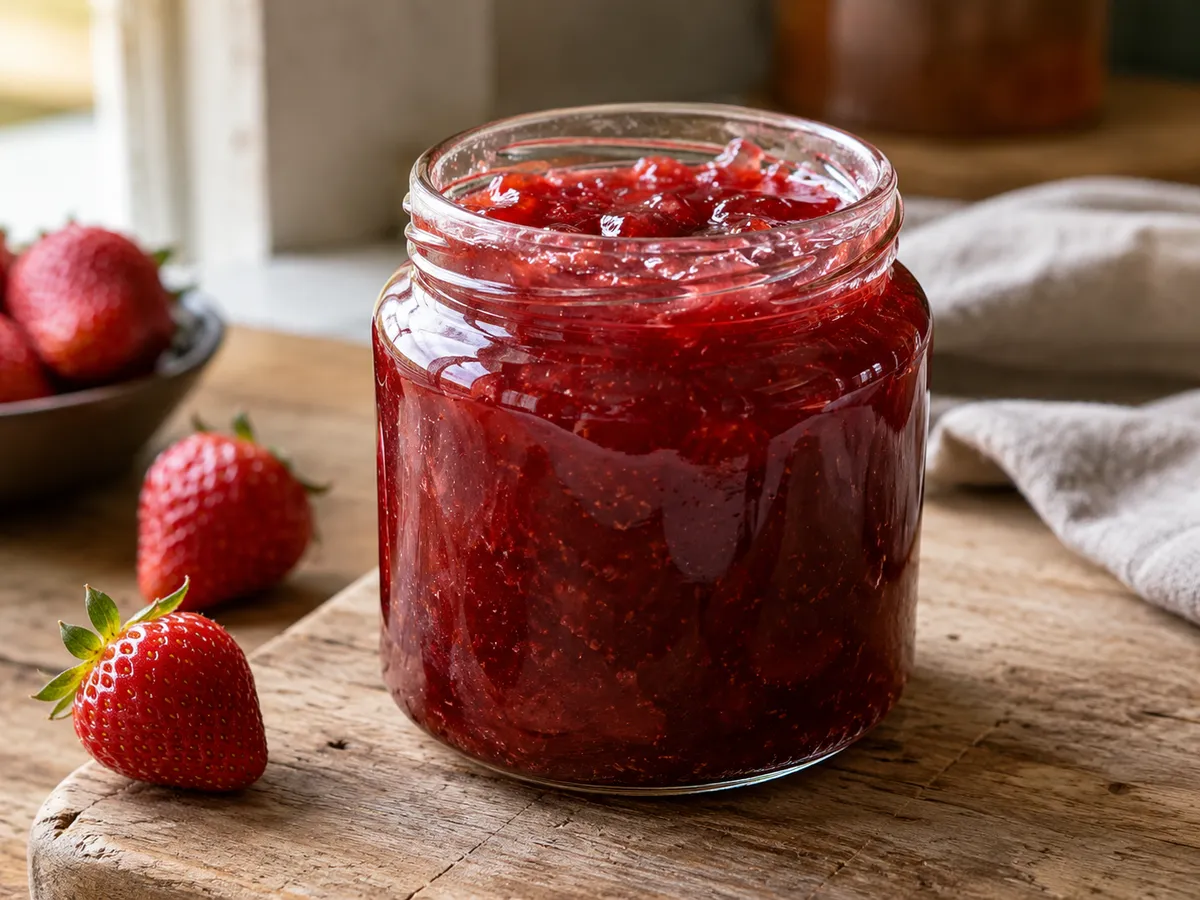
Jam is one of the pantry's most forgiving residents — until you crack the seal. Unopened jars of jam sit comfortably at room temperature for one to two years, thanks to high sugar content and the canning process that drives out oxygen. The moment you open a jar, moisture and ambient microbes enter, so the fridge becomes the right home. Refrigerated jam lasts up to 1 year according to USDA guidance, though quality peaks in the first few months. Knowing what healthy jam looks like versus a jar that has quietly gone off can save a perfectly good breakfast — or spare you a nasty surprise.
Heads up: shelf-life ranges are estimates based on home storage. We make no guarantee of accuracy. When unsure, throw it out.
The full timeline
Month 1 (Peak Quality)
0–1 month opened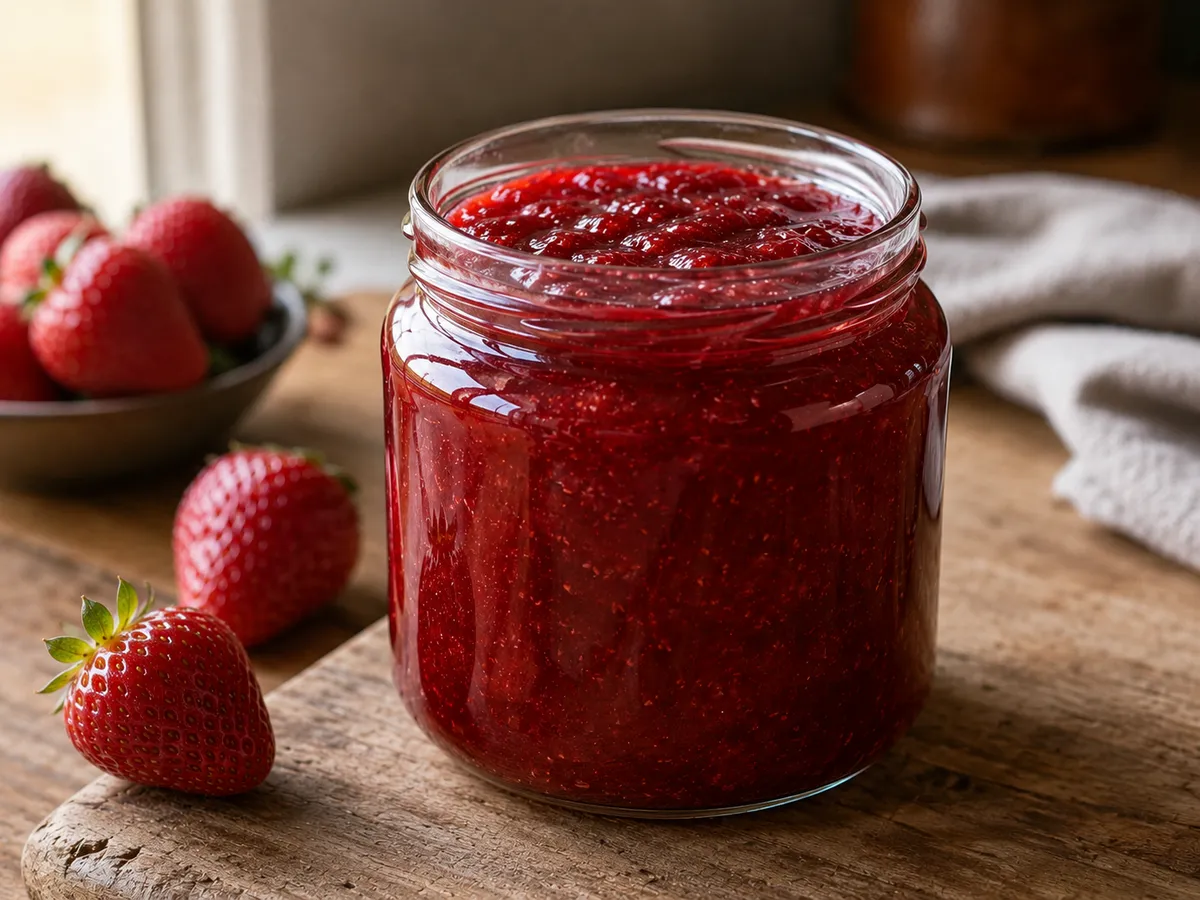
- Vivid, true-to-fruit color throughout the jar
- Firm, glossy gel with no separation
- Fresh fruit aroma when lid is removed
- No visible liquid pooling on surface
- Spread on toast or biscuits
- Stir into yogurt or oatmeal
- Use as a glaze for meats or pastries
Month 3 (Still Good)
1–3 months opened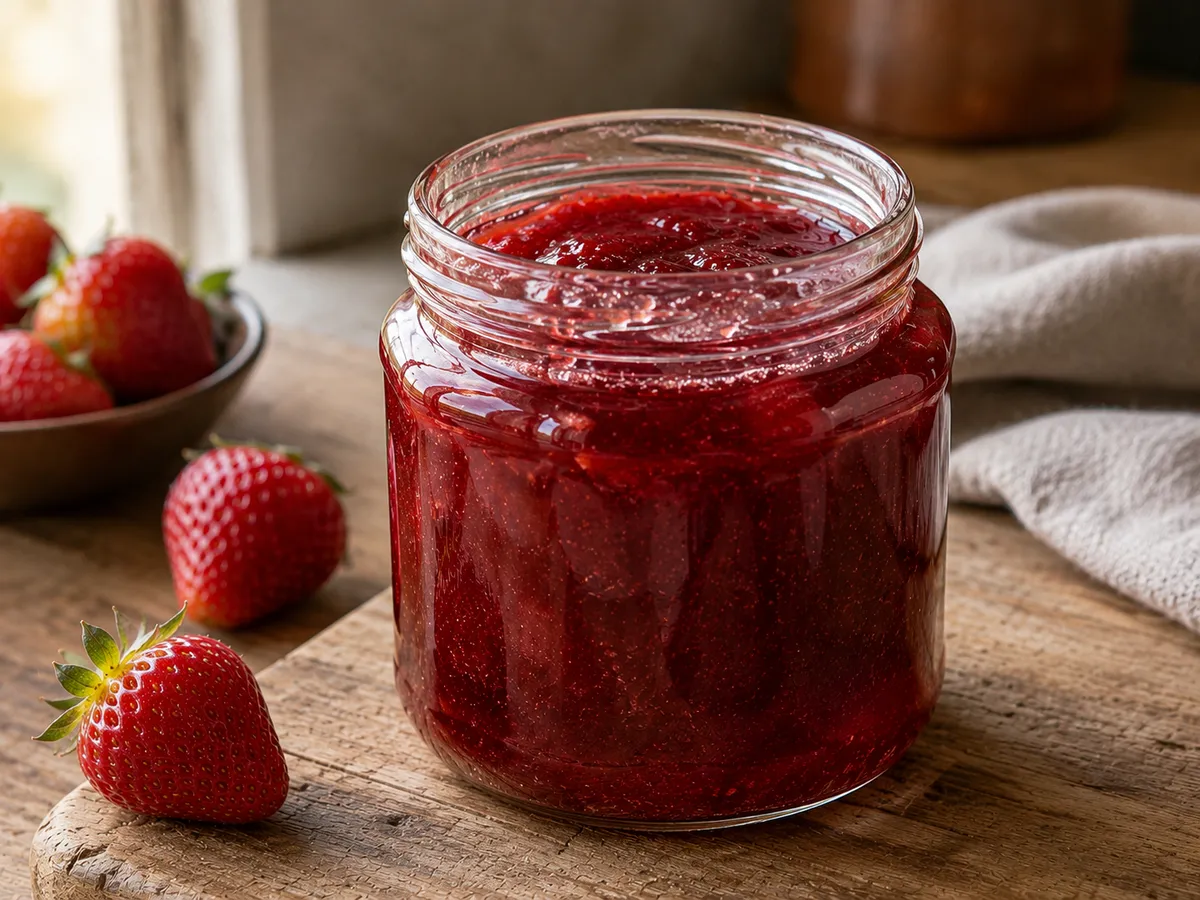
- Color may deepen slightly but remains uniform
- Gel is still intact; minor syrup pooling at edges is normal
- Aroma is present but slightly less intense
- No mold or off-color patches
- Stir to reincorporate any syrup, then use normally
- Fold into baked goods where fresh flavor matters less
Month 6 (Watch Closely)
3–6 months opened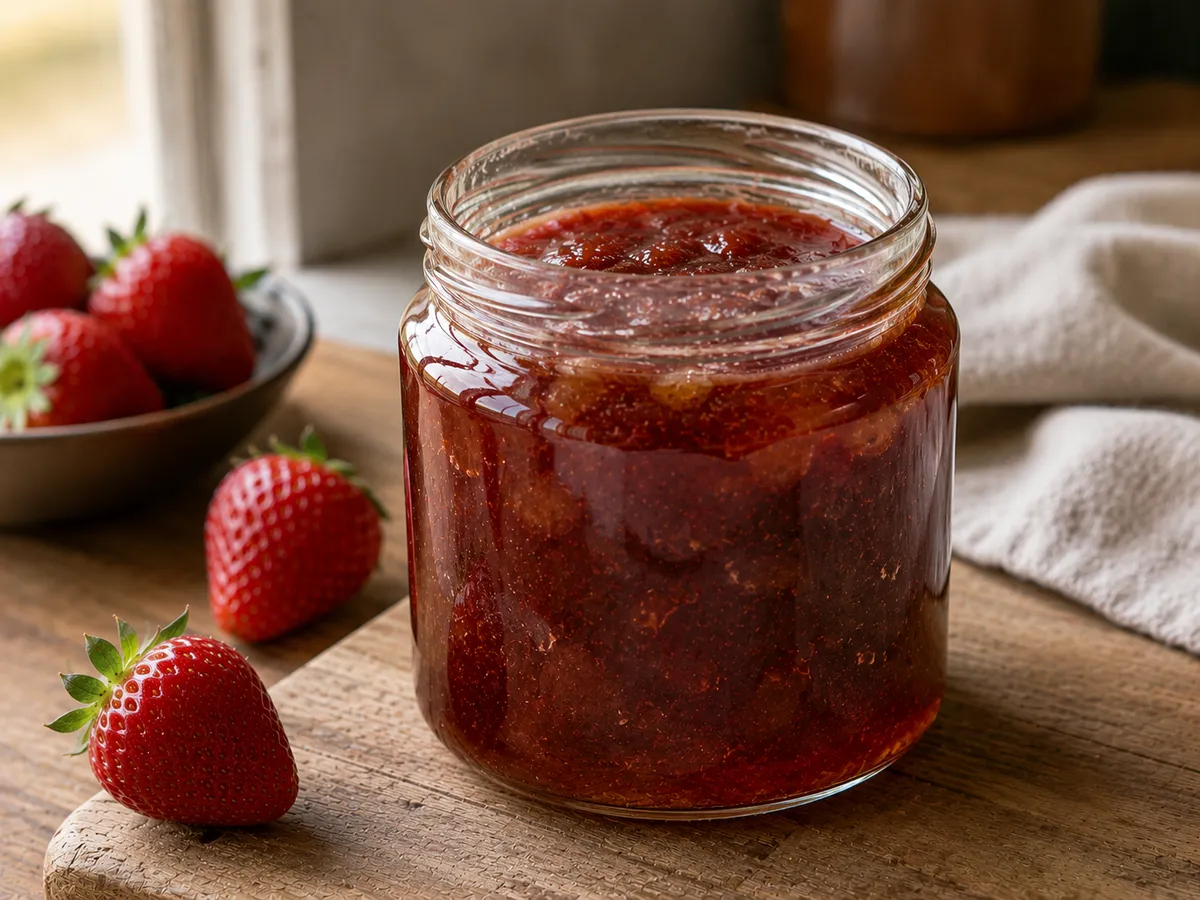
- Color has dulled or shifted toward brownish-red
- Noticeable syrup separation; gel texture is looser
- Aroma is faint or slightly fermented
- Lid seal may show slight bulging — check carefully
- Smell and inspect carefully before each use
- Use quickly in cooked applications like sauces
- Discard if aroma is off or texture is watery
Month 12 (Use Or Lose)
6–12 months opened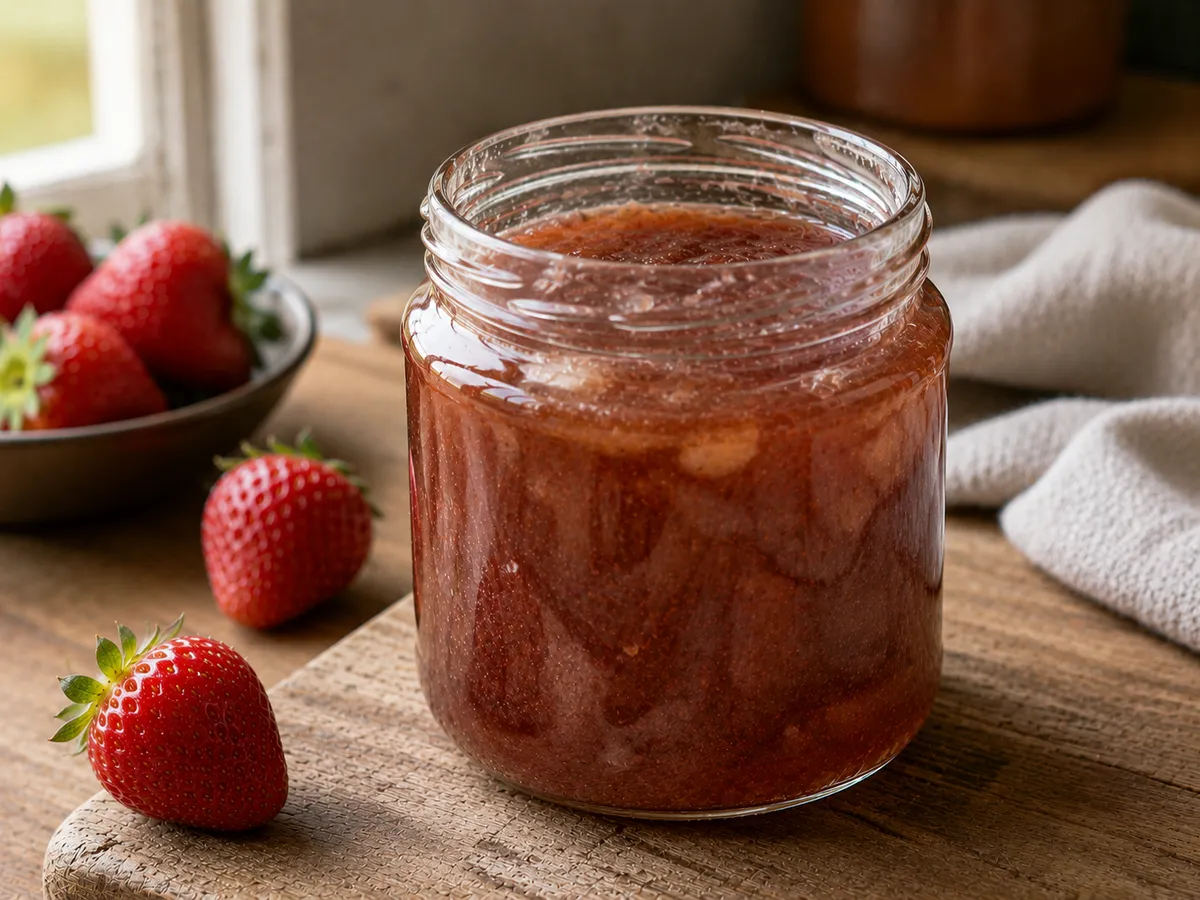
- Color is noticeably faded or oxidized
- Gel has broken down into a runny, syrupy consistency
- Flavor is flat, overly sweet, or mildly fermented
- Surface may show tiny bubbles indicating fermentation
- Cook into a sauce or reduction where texture does not matter
- Discard if bubbling, off-smelling, or moldy
Month 13 (Toss It)
Over 12 months opened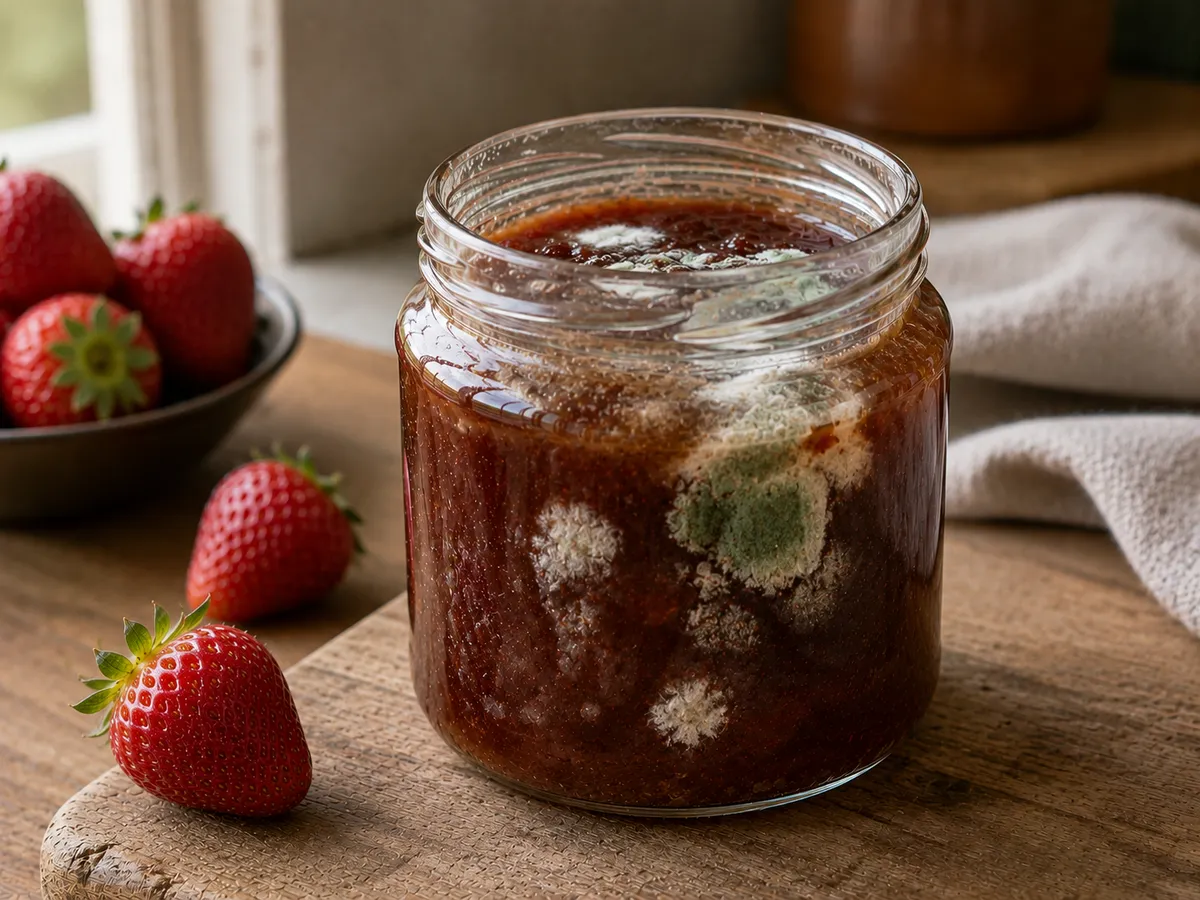
- Visible mold — white, green, or black fuzzy patches on surface
- Strong fermented, yeasty, or alcoholic odor
- Lid is bulging or hisses when pressed
- Discoloration that is clearly not the fruit's natural color
- Discard the entire jar — do not scoop and save
- Wash the jar for recycling
Common questions
Can I store opened jam in the pantry instead of the fridge?
No. Once opened, the seal is broken and mold spores can colonize the surface. The fridge slows that process significantly. Pantry storage of opened jam is not recommended by the USDA.
Is it safe to scoop mold off jam and eat the rest?
Sage's Verdict: No. Mold in high-moisture foods like jam can extend invisible threads (mycelium) well below the visible surface. Discard the entire jar. This differs from hard cheeses, where surface mold can sometimes be cut away safely.
How long does unopened store-bought jam last?
Commercially sealed jam typically lasts 1–2 years in a cool, dark pantry. Check the best-by date on the lid — that date assumes the jar has never been opened.
Does homemade jam last as long as store-bought?
Generally no. Commercially canned jam is processed in controlled conditions. Properly water-bath-canned homemade jam lasts about 1 year unopened; refrigerator jam (no canning) should be used within 3–4 weeks.
Why is there liquid at the top of my jam jar?
That is syneresis — water weeping out of the gel structure. It is normal and harmless. Stir it back in before using. If the liquid smells fermented or the jam is past its window, discard instead.
Can I freeze jam to extend its life?
Yes. Jam freezes well for up to 1 year. Use freezer-safe containers and leave headspace for expansion. Thaw in the fridge overnight; texture may be slightly looser after thawing but flavor holds well.

Jam rewards simple habits: keep it cold after opening, use a clean dry spoon every time, and check the surface before each use. Spot mold? The whole jar goes — no negotiations.