
How Long Does Ketchup Last in the Fridge?
Opened ketchup keeps well refrigerated, but it does eventually fade.
Opened ketchup lasts up to 6 months refrigerated when kept tightly sealed.
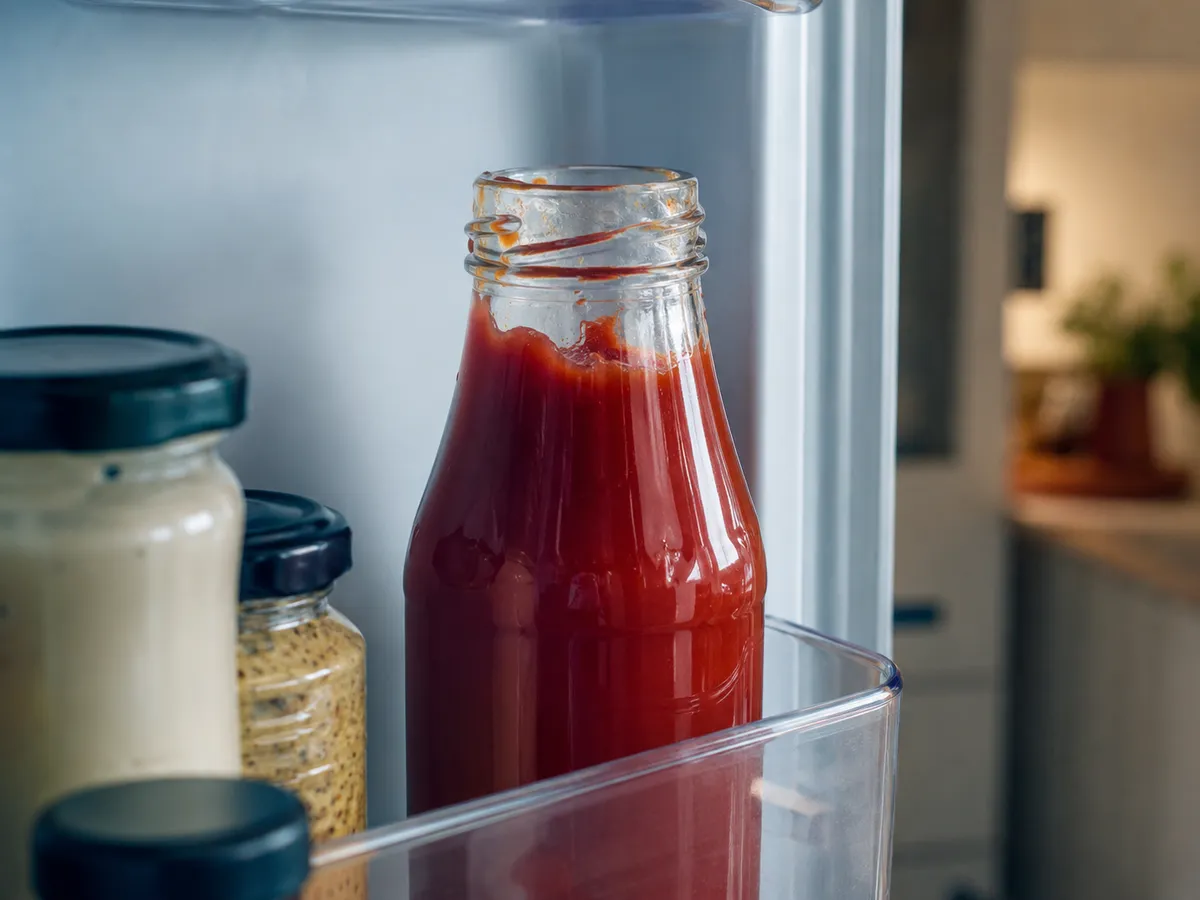
Ketchup is one of the more forgiving condiments in your fridge door, thanks to its high acidity and sugar content, which naturally inhibit bacterial growth. Still, an opened bottle of ketchup doesn't last forever. Once you crack that seal, oxidation and slow microbial activity begin working against flavor and texture. Knowing the visual and sensory cues at each stage helps you get the most out of every bottle without guessing. This guide walks through what refrigerated ketchup looks and smells like from freshly opened to well past its prime.
Heads up: shelf-life ranges are estimates based on home storage. We make no guarantee of accuracy. When unsure, throw it out.
The full timeline
Week 1–2 (Freshly Opened)
1–2 weeks after opening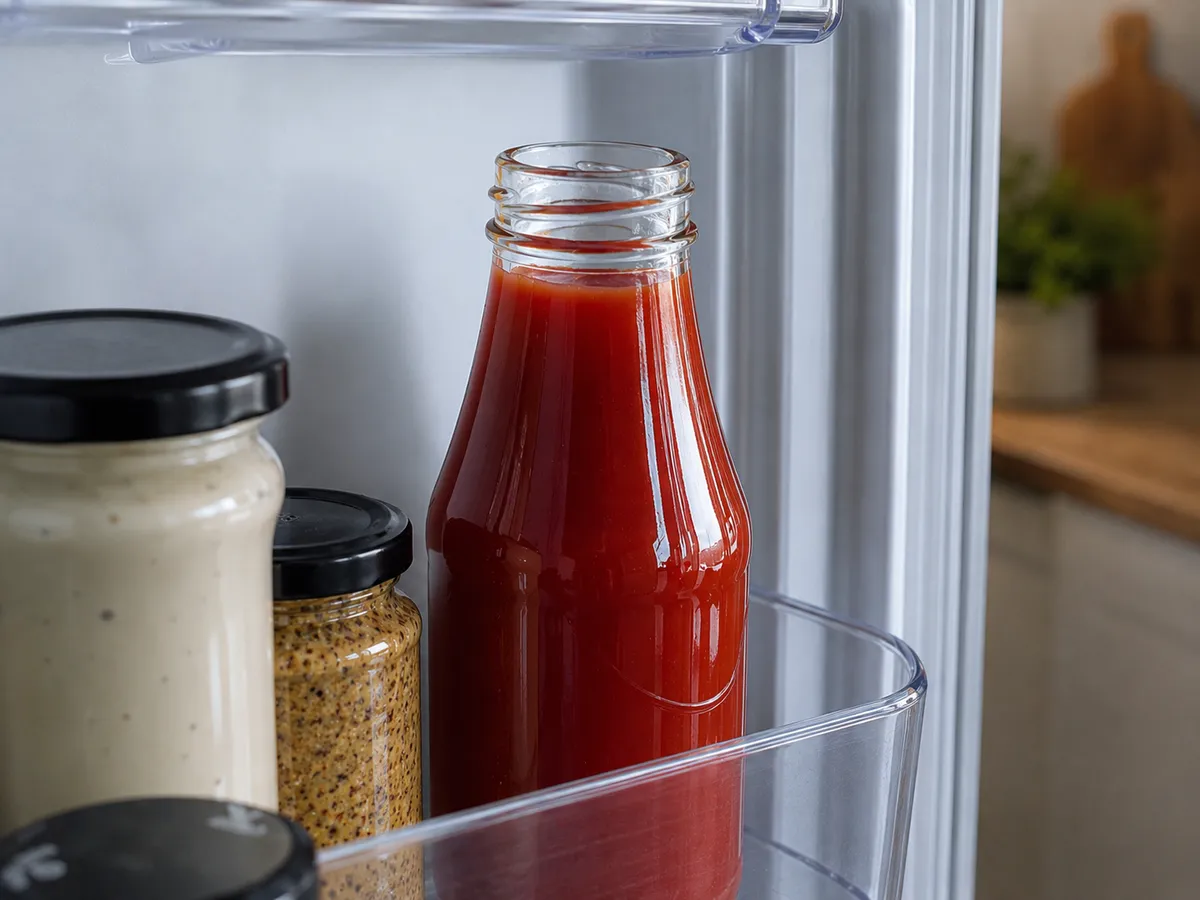
- Bright, uniform red color throughout
- Smooth, glossy texture with no separation
- Clean tomato-vinegar aroma, no off notes
- Pours or squeezes evenly without effort
- Use freely on burgers, fries, or as a recipe base
- Store with lid tightly closed in the fridge door
Week 3–8 (Still Good)
3–8 weeks after opening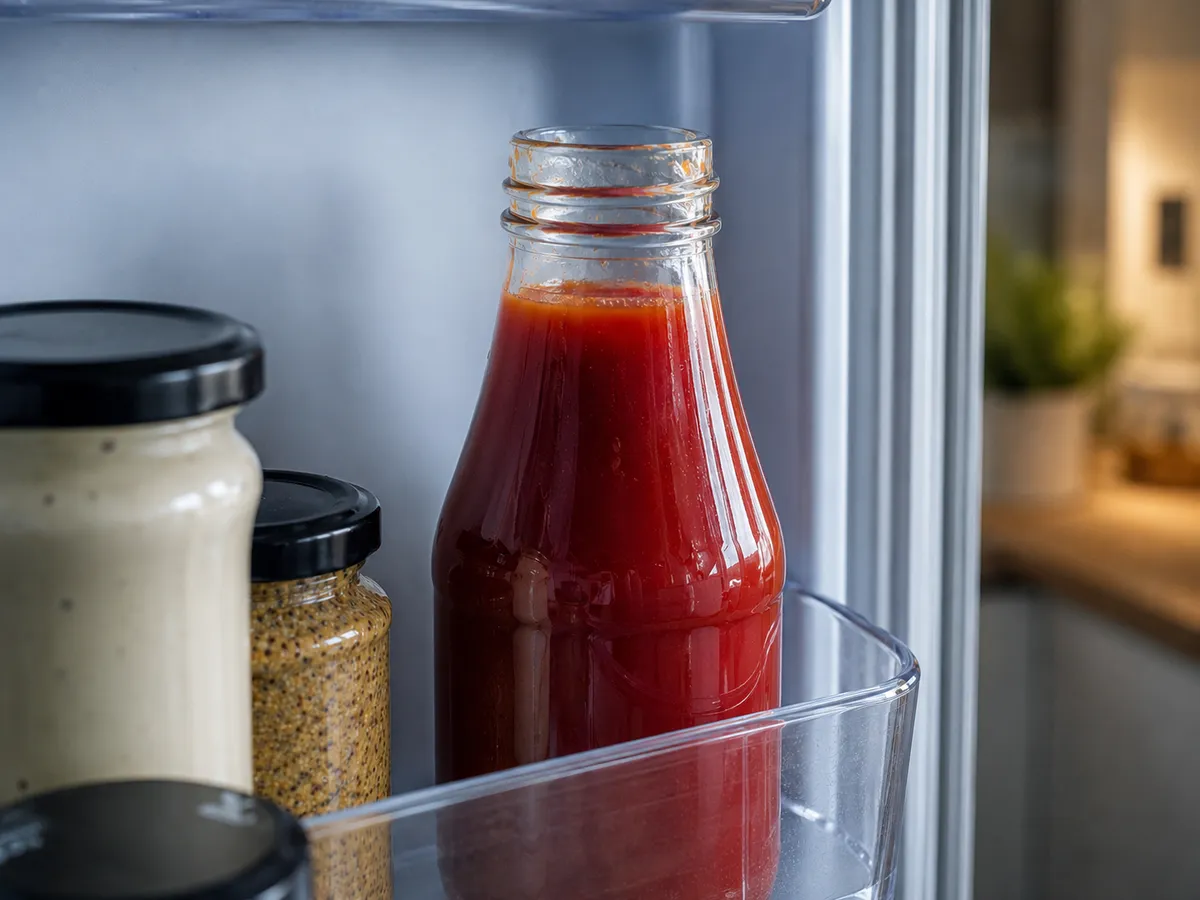
- Color remains red but may deepen very slightly
- Texture is consistent, no visible liquid pooling
- Aroma is still recognizably tangy and tomatoey
- Taste is on-point with no bitterness or staleness
- Continue normal use
- Check the printed best-by date as a secondary reference
Week 9–20 (Fading Quality)
9–20 weeks after opening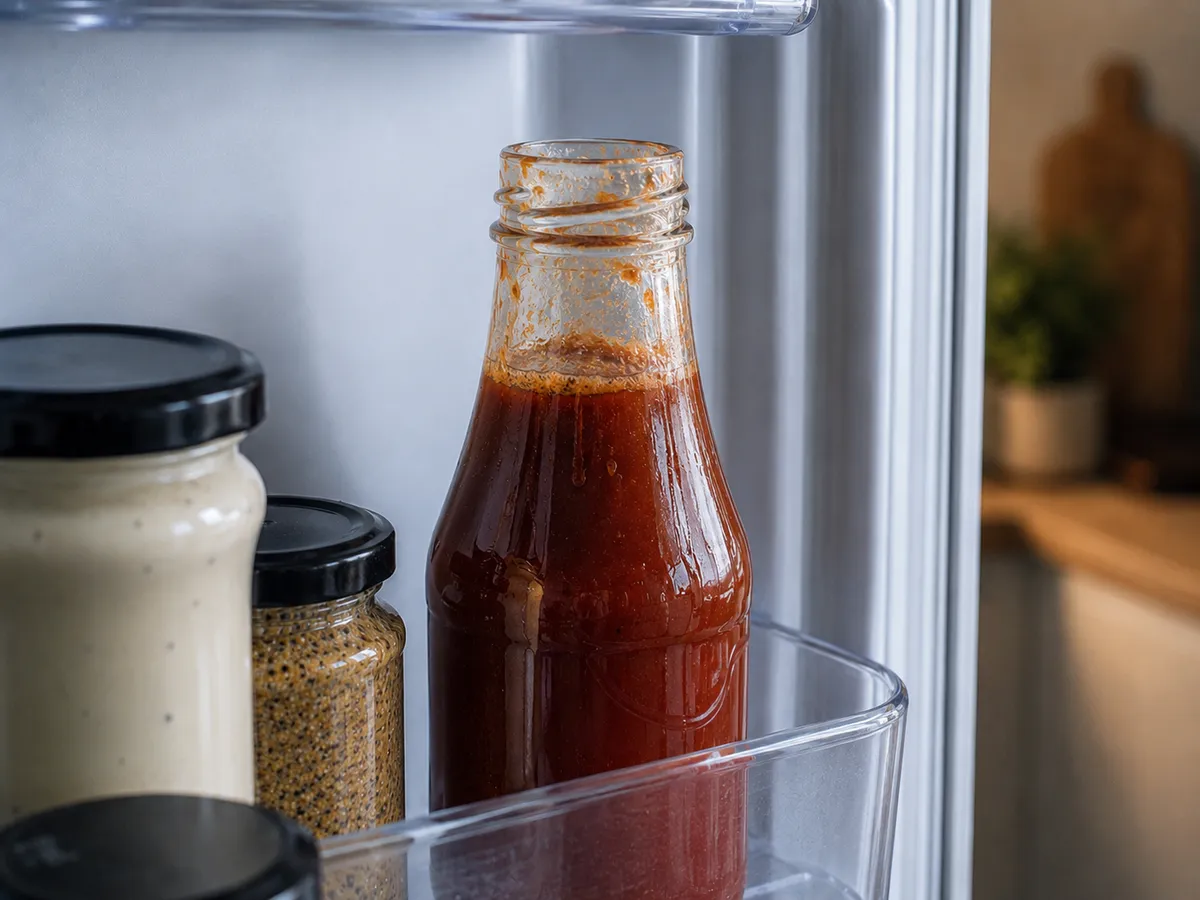
- Noticeable darkening toward brownish-red at the neck or surface
- Thin watery layer separating at the top of the bottle
- Aroma is flatter, less bright vinegar note
- Flavor may taste slightly dull or mildly sour
- Shake well and taste before using
- Use in cooked applications like sauces or marinades where flavor loss matters less
- Toss if the smell is off or taste is noticeably bitter
Week 21–26 (Past Prime)
21–26 weeks after opening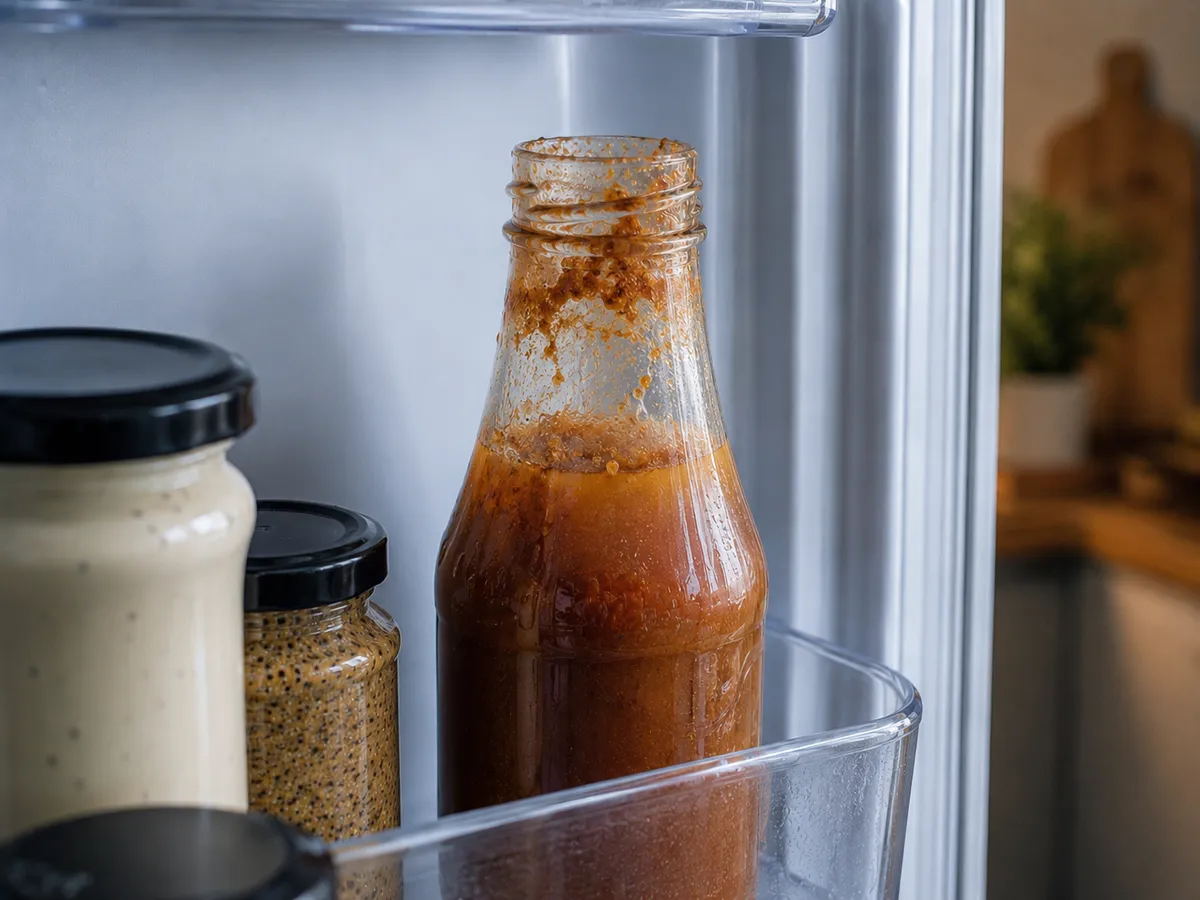
- Color has shifted noticeably brown or orange-brown
- Strong separation with watery liquid pooled on top
- Smell is vinegary-sour with possible fermented undertone
- Texture may be thicker or clumpy near the opening
- Taste a small amount — if off, discard
- Use only in heavily cooked dishes
- Toss and open a fresh bottle
Week 27 (Discard Now)
27+ weeks after opening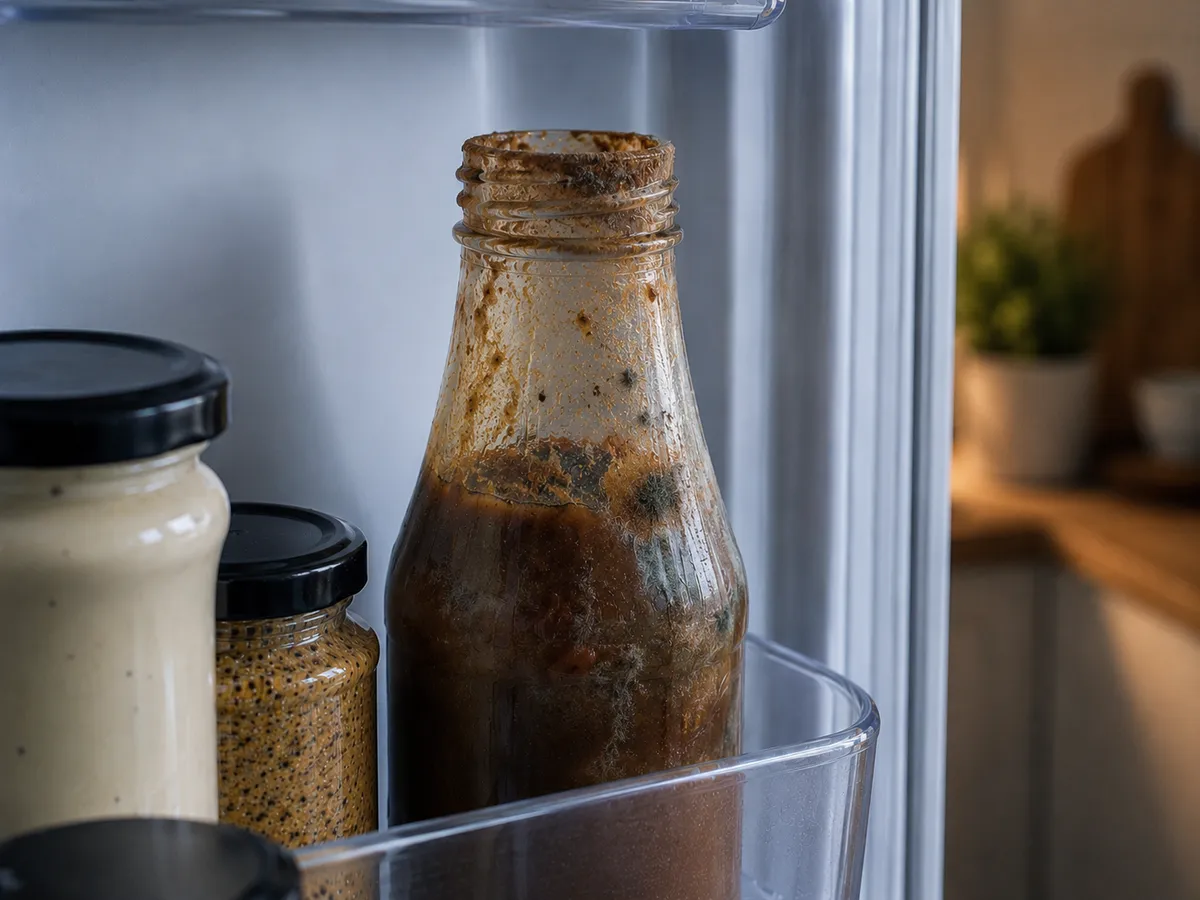
- Visible mold spots (white, green, or black) at cap or inside neck
- Strongly fermented or rotten smell on opening
- Color is brown or gray throughout, no red remaining
- Bottle may bulge or cap may be difficult to open due to gas
- Discard the entire bottle
- Do not taste or use in any application
Common questions
Does ketchup need to be refrigerated after opening?
Yes. Unopened ketchup is shelf-stable, but once opened, refrigeration slows oxidation and microbial activity significantly. An opened bottle left at room temperature will degrade in flavor much faster — typically within 1 month — and carries a higher spoilage risk in warm kitchens.
Is the watery liquid on top of my ketchup safe?
That liquid is water and vinegar separating from the tomato solids — completely normal. Shake the bottle to recombine. If the liquid smells fermented or the ketchup beneath it looks brown, that's a quality signal to evaluate more carefully. Sage's Verdict: separation alone is not a reason to toss.
Can I use ketchup past the best-by date?
Best-by dates on ketchup indicate peak quality, not safety. Refrigerated ketchup that smells and tastes normal past its printed date is generally fine to use. Use your senses — color, smell, and taste — as the real guide rather than the date alone.
How long does unopened ketchup last in the pantry?
Commercially produced unopened ketchup is shelf-stable for 1–2 years at room temperature. Check the best-by date on the bottle. Once opened, move it to the fridge and aim to use it within 6 months.
Why has my ketchup turned dark brown?
Oxidation is the main culprit. Exposure to air each time you open the bottle causes the tomato pigments to break down over time. Darkening is a quality issue — it signals the ketchup is aging — but brown color alone doesn't mean it's unsafe. Smell and taste are the deciding factors.
Can you freeze ketchup to extend its shelf life?
Technically yes, but it's rarely worth it. Freezing alters the emulsion and texture, leaving you with a watery, separated product after thawing. Given that refrigerated ketchup already lasts 6 months, freezing offers little practical benefit.

Ketchup is one of the most acid-protected condiments in your fridge. Respect the 6-month window, keep the cap tight, and let color plus smell guide your calls.