
How to Tell If Cheddar-Cheese Has Gone Bad
Spot the difference between harmless rind and real spoilage before your next snack board.
Cheddar-cheese lasts 3–4 weeks refrigerated after opening when wrapped tightly.
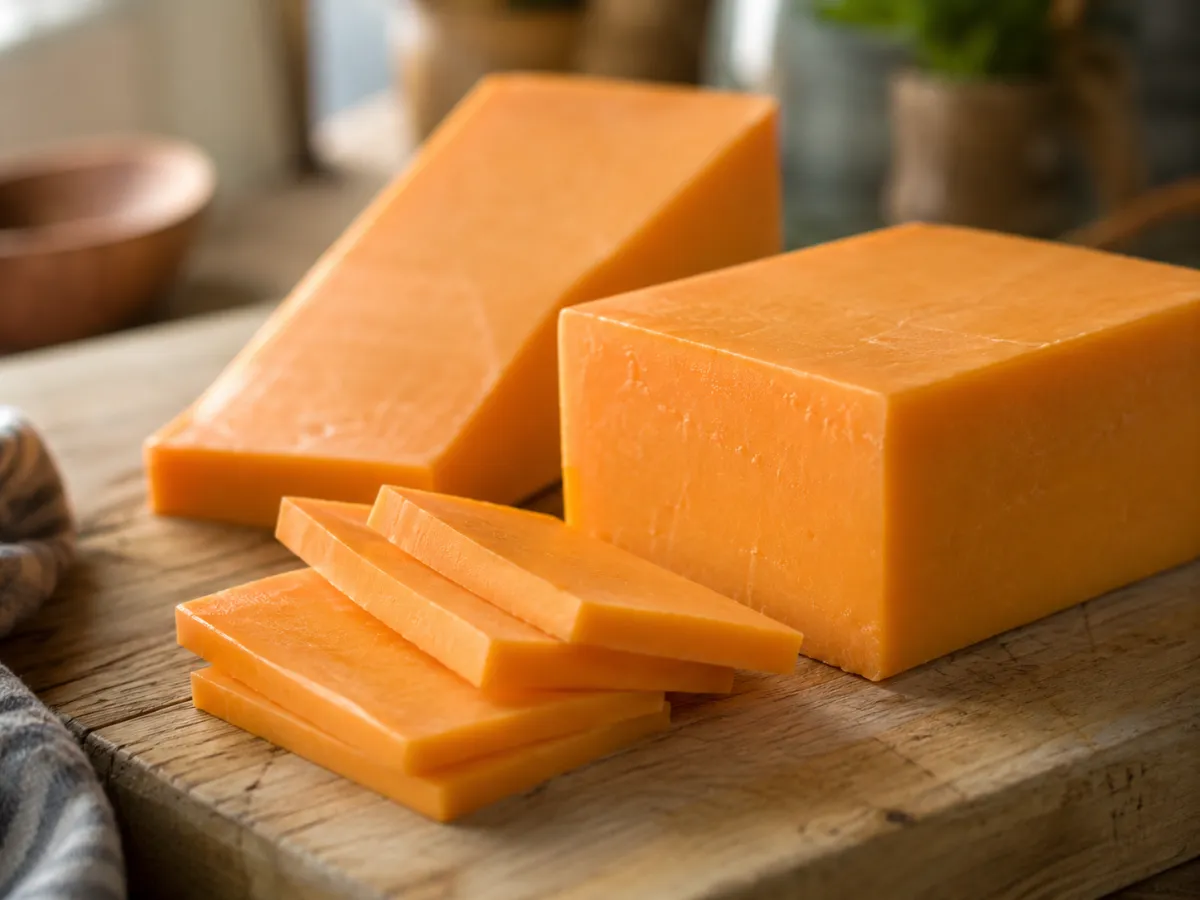
Cheddar-cheese is one of the most forgiving cheeses in the dairy case, but it still has limits. Whether you grabbed a block from the deli counter or cracked open a pre-sliced bag, knowing the difference between a harmless surface bloom and genuine spoilage can save you from both unnecessary waste and an upset stomach. This guide walks through every stage of cheddar-cheese's refrigerator life, from peak freshness to the point where the bin is the only sensible destination. Cues are straightforward: color, texture, smell, and a little common sense.
Heads up: shelf-life ranges are estimates based on home storage. We make no guarantee of accuracy. When unsure, throw it out.
The full timeline
Day 1–7 (Peak Fresh)
1–7 days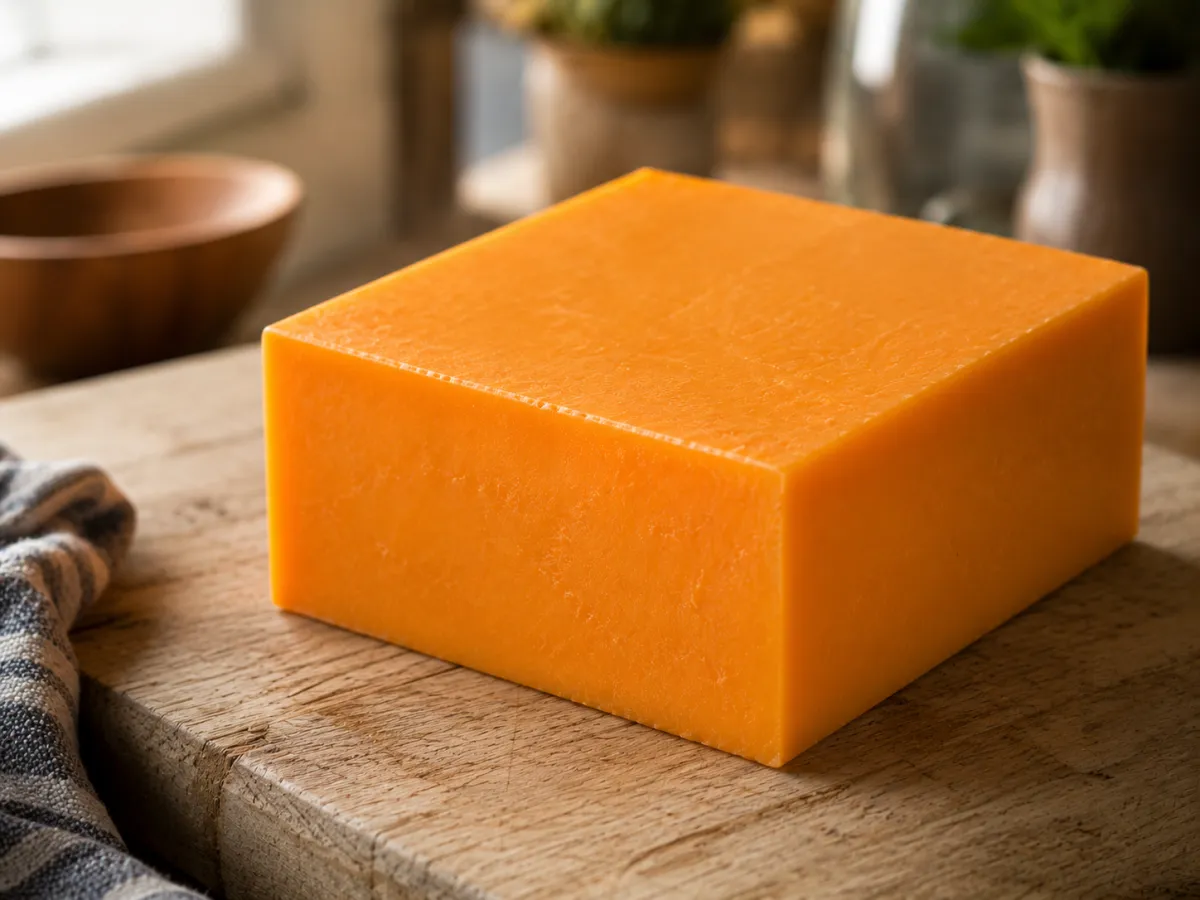
- Color is uniform — pale ivory to deep orange depending on variety
- Surface is smooth and slightly waxy with no tackiness
- Aroma is clean, milky, and mildly tangy
- Texture is firm and slices cleanly without crumbling excessively
- Slice for sandwiches or cheese boards
- Grate for cooking
- Rewrap tightly and refrigerate
Day 8–21 (Still Good)
8–21 days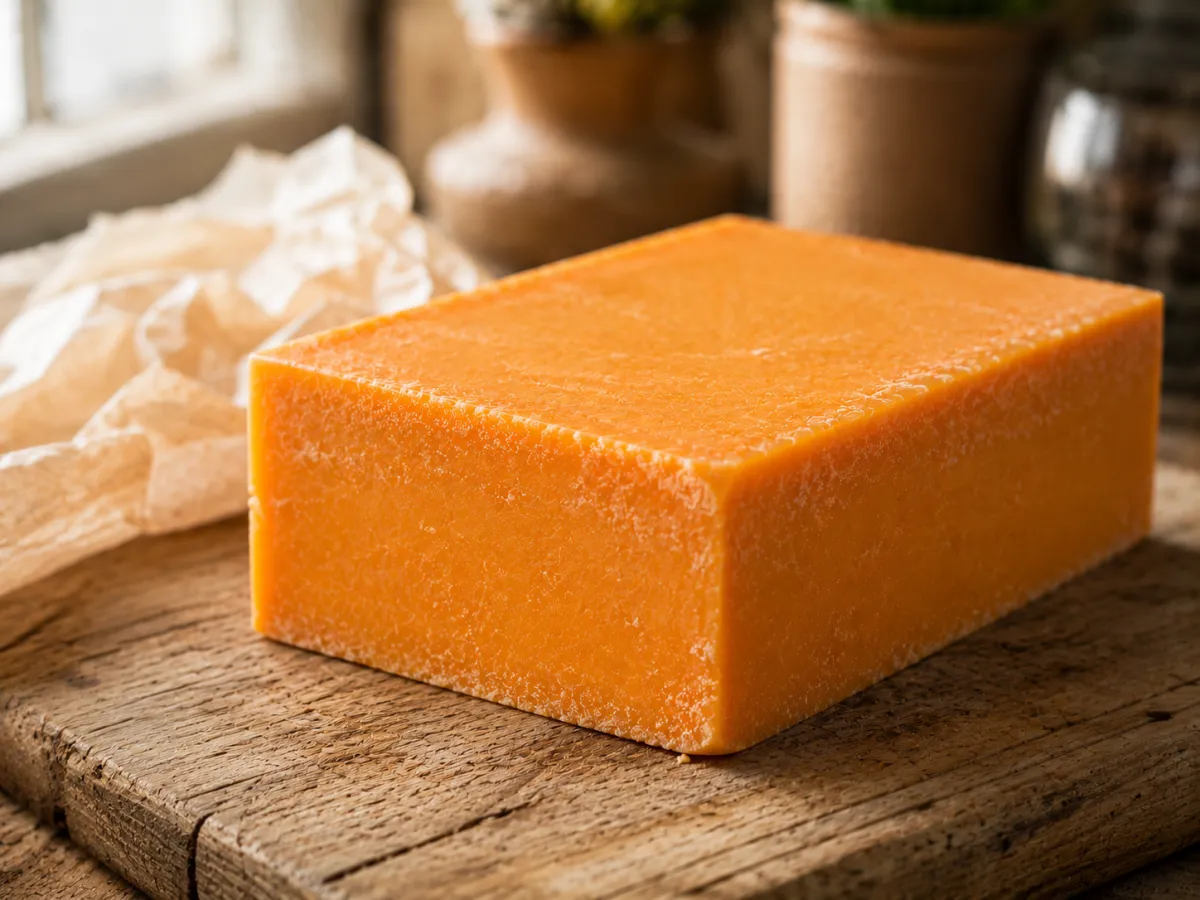
- Surface may show slight dryness or a thin whitish film from salt crystallization
- Edges may have darkened a shade but interior color remains consistent
- Smell is sharper and more pronounced — normal for aging cheddar
- Texture firms up slightly; crumbles more at the edges
- Trim any dried edges and use normally
- Grate into sauces or baked dishes
- Continue storing wrapped in the coldest part of the fridge
Day 22–28 (Borderline)
22–28 days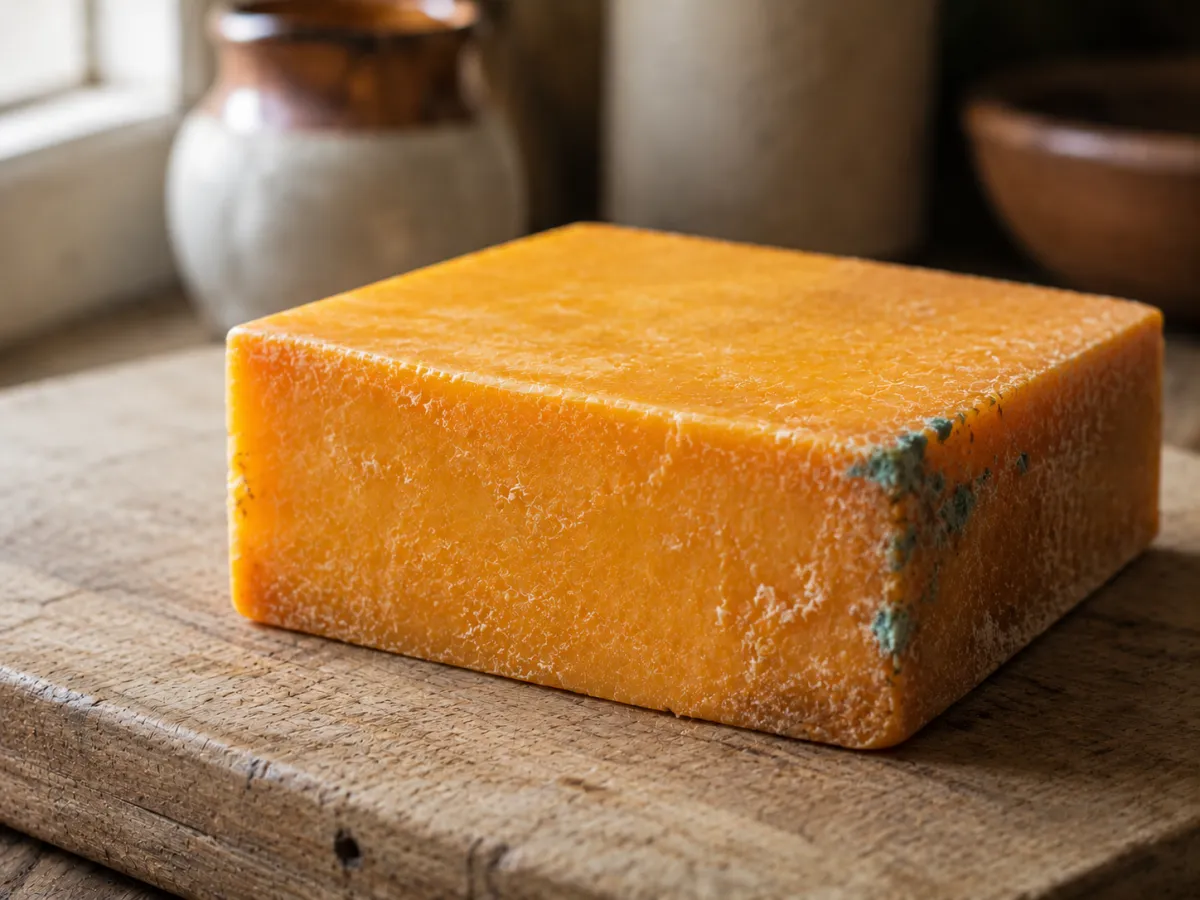
- Surface feels tacky or slightly slimy in spots
- Small patches of blue, green, or black mold may appear on the rind or cut face
- Smell has shifted from sharp to sour or ammonia-like
- Texture may be gummy rather than firm near the surface
- Cut off mold with a 1-inch margin and use the interior promptly
- Discard if ammonia smell persists after trimming
- Use trimmed portions in cooked dishes only
Day 29–35 (Spoiled)
29–35 days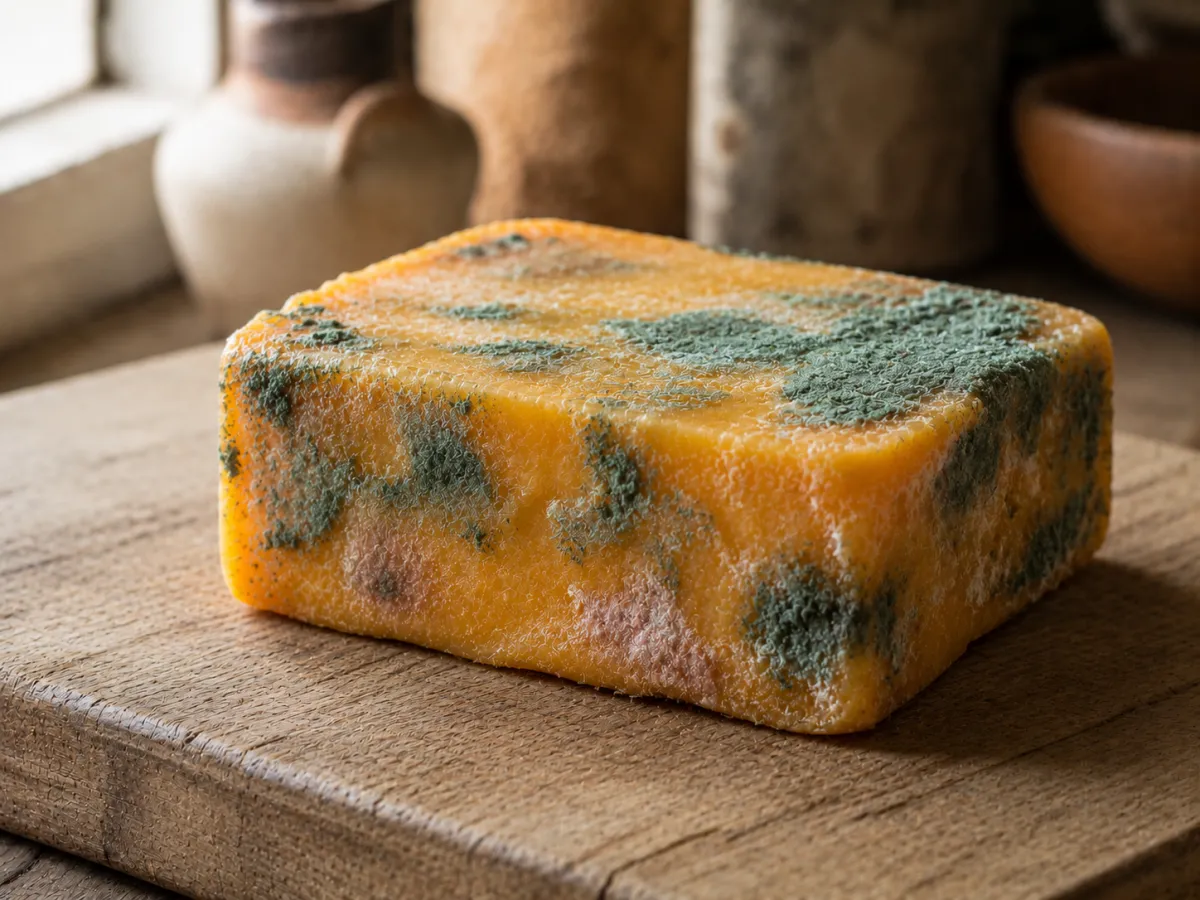
- Mold covers a large portion of the surface or has penetrated visibly into the interior
- Strong sour, rancid, or ammonia odor that does not go away
- Surface is wet, slimy, or discolored with pink or black patches
- Texture has become soft, mushy, or crumbly throughout — not just at edges
- Toss the entire block
- Discard packaging and clean the storage container
Common questions
Can I eat cheddar-cheese with a small spot of mold?
For a firm block of cheddar-cheese, yes — cut at least 1 inch around and below the mold spot and use the rest promptly. Sage's Verdict: this only works on hard blocks; if the cheese is already soft or the mold is widespread, discard it entirely.
What does bad cheddar-cheese smell like?
Spoiled cheddar-cheese smells sour, rancid, or sharply ammonia-like — noticeably different from the pleasantly tangy bite of aged cheddar. If the smell makes you pull back, trust that reaction.
Does shredded cheddar-cheese last as long as a block?
No. Shredded cheddar-cheese has far more surface area exposed to air and moisture, so it typically lasts only 5–7 days after opening. Check for clumping, off smells, or visible mold and discard sooner if any appear.
Can I freeze cheddar-cheese to extend its life?
Yes. Wrap cheddar-cheese tightly in plastic wrap, then foil, and freeze for up to 6 months. Texture becomes crumblier after thawing, so frozen cheddar works best grated into cooked dishes rather than sliced for snacking.
Are white spots on cheddar-cheese always mold?
Not always. Hard white or slightly crunchy spots are often tyrosine or calcium lactate crystals — a natural byproduct of aging and completely safe to eat. Fuzzy, powdery, or colored growth is mold and should be handled with the 1-inch trim rule or discarded.
How should I store cheddar-cheese to maximize freshness?
Wrap cheddar-cheese in wax or parchment paper first, then loosely in plastic wrap or a zip bag. This lets it breathe while limiting moisture loss. Store in the coldest part of the fridge, not the door, and keep it away from strong-smelling foods.

Cheddar-cheese rewards careful wrapping and a cold fridge. Trim confidently, smell critically, and when in doubt, the 1-inch rule is your best friend.