
How Long Do Frozen Vegetables Last in the Freezer?
Most frozen vegetables stay at peak quality for 8–12 months — here's how to store them right.
Frozen vegetables last 8–12 months in the freezer when kept at 0°F (−18°C) in a sealed bag.
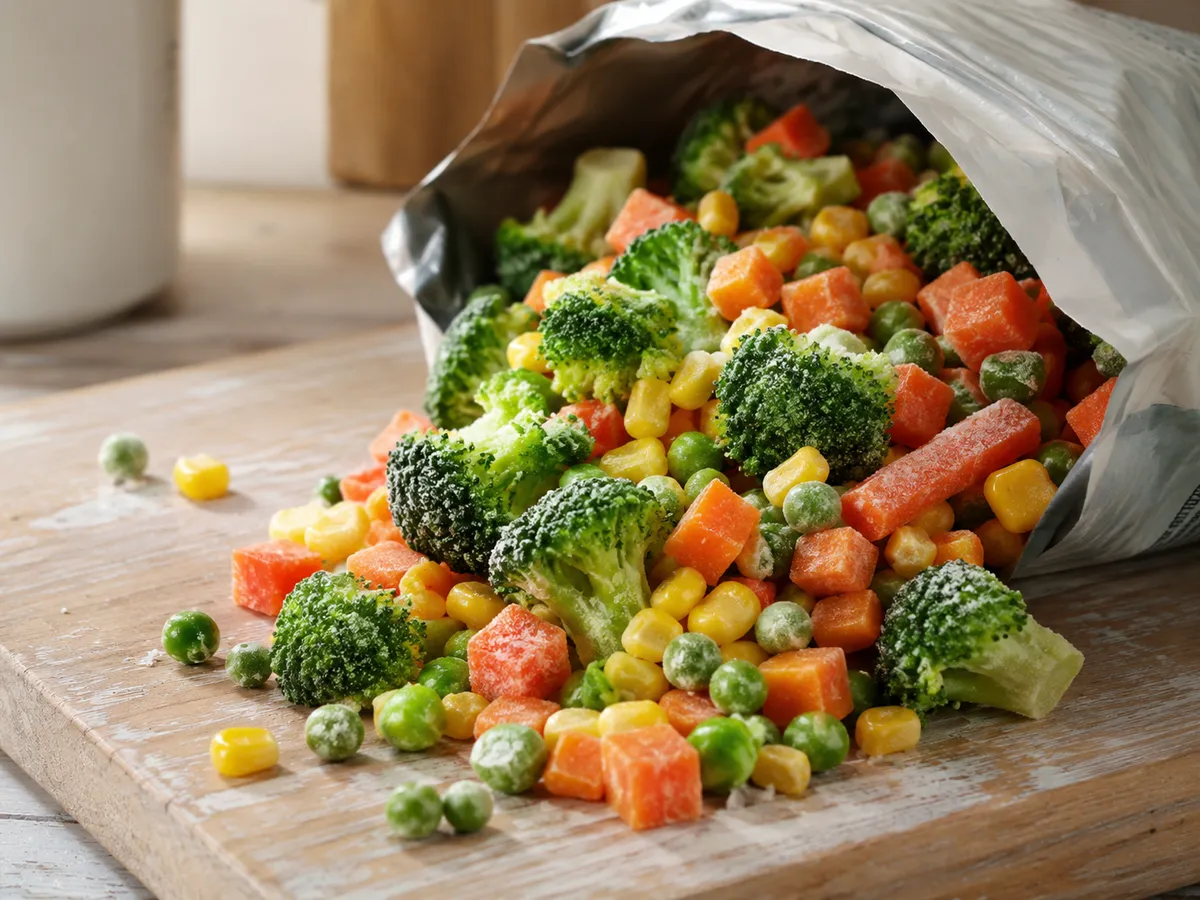
Frozen vegetables are one of the most practical staples in any kitchen — blanched at peak ripeness and locked in cold storage, they can outlast nearly everything else in your freezer. But "frozen" doesn't mean "forever." Frozen-vegetables lose color, texture, and flavor over time, especially if exposed to temperature swings or air. Knowing how to store them properly — and how to spot the signs of freezer burn or degradation — means less waste and better meals. This guide walks through every stage of a frozen vegetable's freezer life, from the day you bring it home to the point where it's time to let it go.
Heads up: shelf-life ranges are estimates based on home storage. We make no guarantee of accuracy. When unsure, throw it out.
The full timeline
Month 1–2 (Peak Quality)
1–2 months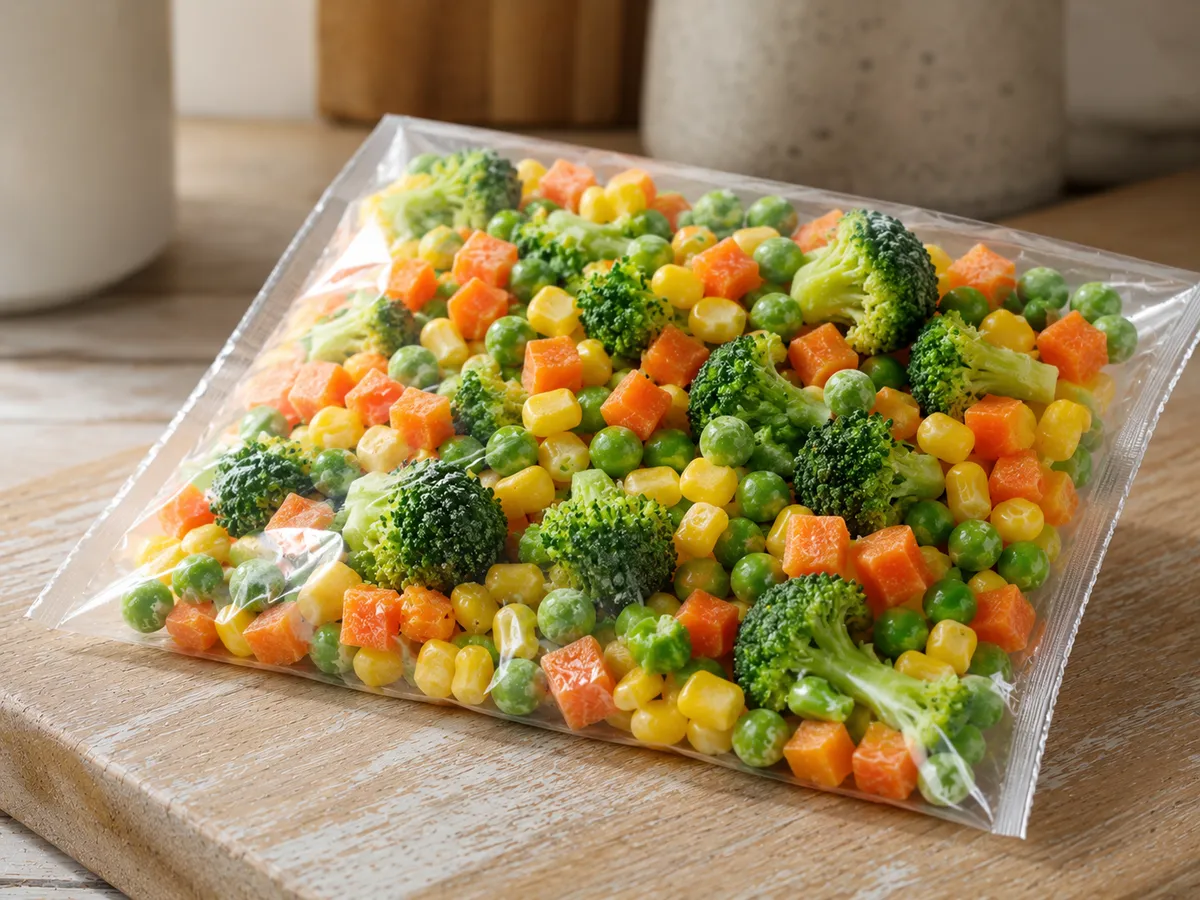
- Vivid, true-to-life color with no dullness
- Pieces are individually loose and free-flowing in the bag
- No ice crystals visible on vegetable surfaces
- Bag is fully sealed with no air pockets
- Cook from frozen in any recipe
- Steam or microwave as a quick side
- Add directly to soups or stir-fries
Month 3–6 (Still Good)
3–6 months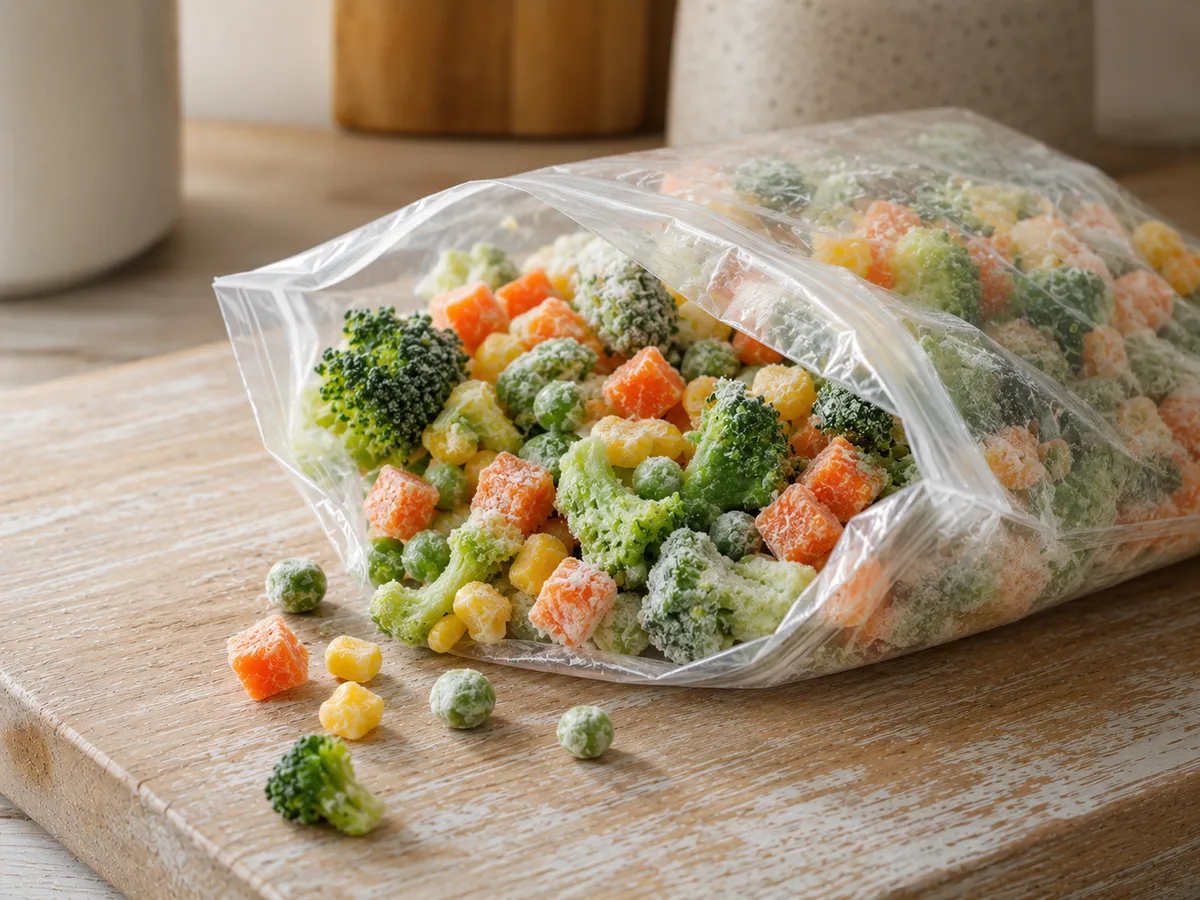
- Color remains mostly vibrant but may be very slightly muted
- Pieces still separate easily when the bag is shaken
- Minimal fine frost on a few pieces — not clumped
- Bag seal intact; no off-odor when opened
- Cook from frozen as usual
- Blend into soups or sauces where texture matters less
- Use in casseroles, frittatas, or grain bowls
Month 7–10 (Freezer Burn Creeping)
7–10 months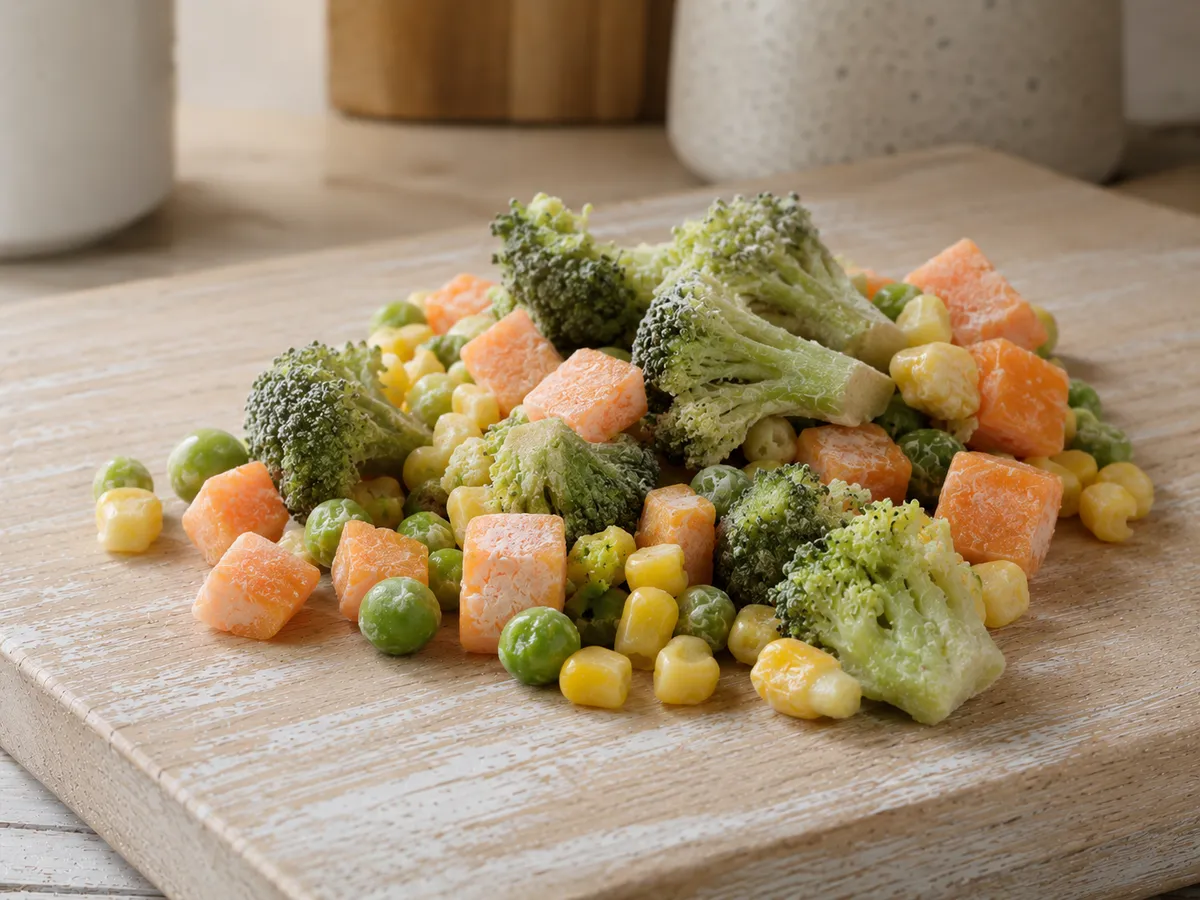
- Noticeable white or grayish freezer-burn patches on vegetable surfaces
- Some pieces clumped together from moisture migration
- Color has faded — greens look olive, oranges look pale
- Mild stale or cardboard-like odor when bag is opened
- Trim off heavily freezer-burned pieces before cooking
- Use in heavily seasoned dishes — curries, stews, fried rice
- Blend into smoothies or puréed soups where texture is irrelevant
- Toss if more than half the bag shows heavy burn
Month 11–12 (Past Prime)
11–12 months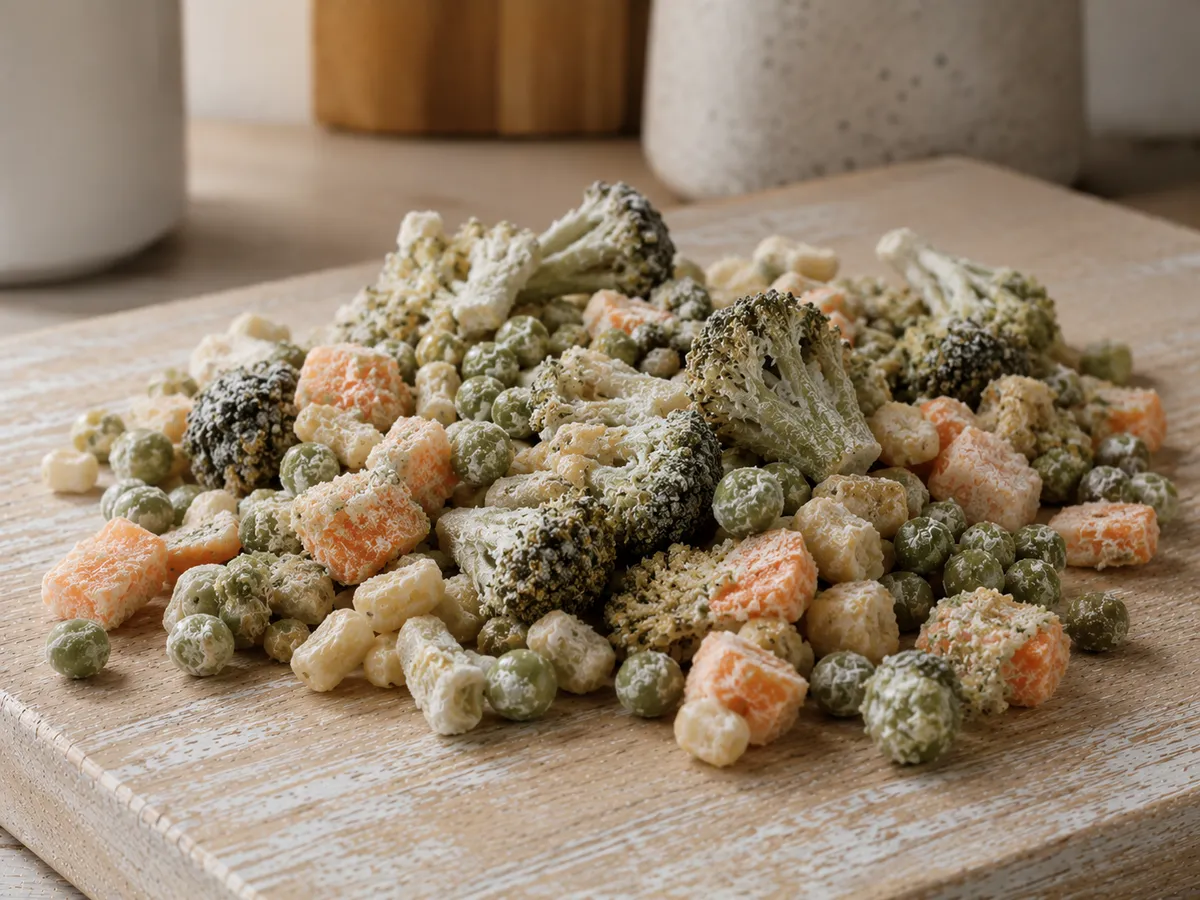
- Significant color loss — most pieces appear dull or grayish
- Heavy clumping; bag feels like a solid block in spots
- Pronounced stale or papery smell on opening
- Texture after cooking is noticeably mushy or stringy
- Puree into soups or sauces where texture won't show
- Use in heavily spiced stews or curries
- Discard if smell is strongly off or color is uniformly gray
Month 13 (Toss It)
13+ months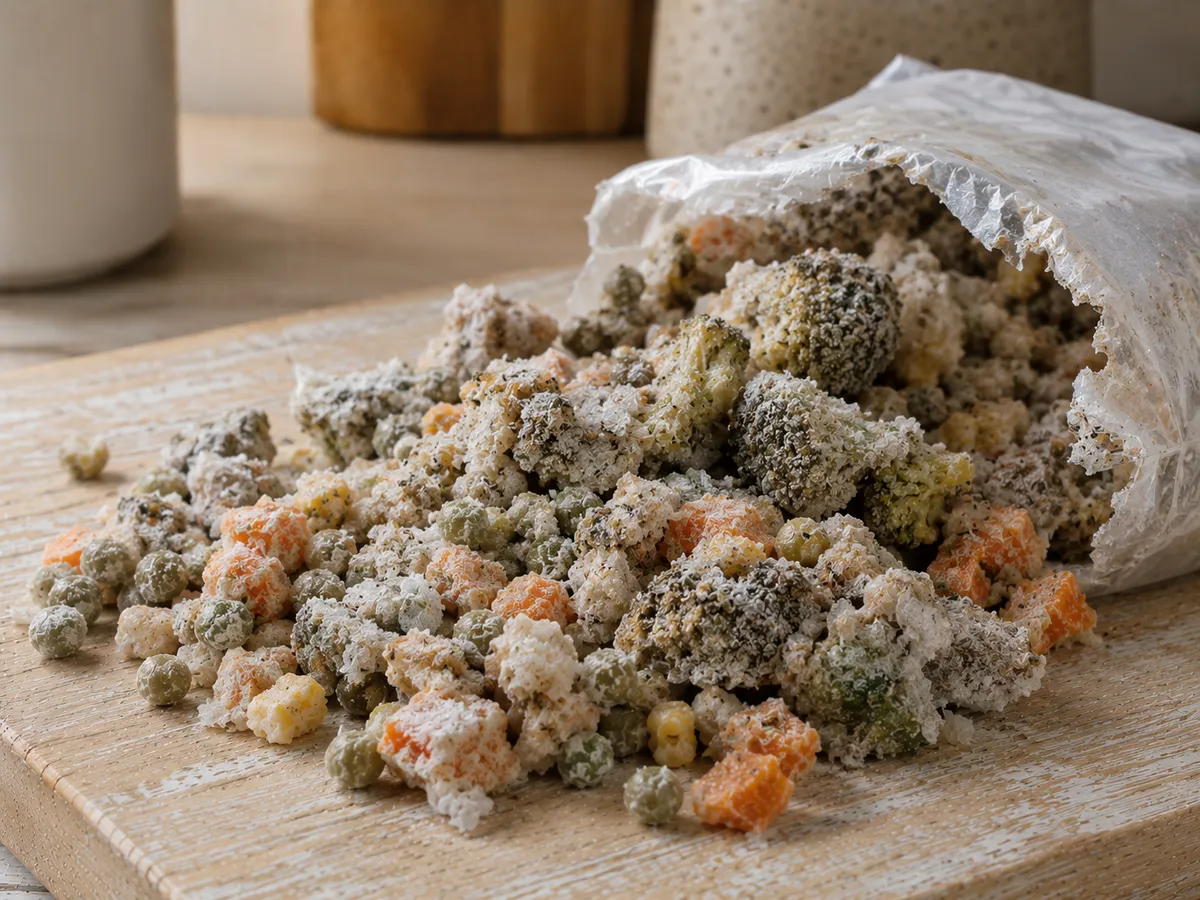
- Uniformly gray or brown coloration throughout the bag
- Strong off-odor — stale, rancid, or unidentifiable
- Solid ice block with vegetables fully fused together
- Visible mold if any thawing has occurred
- Discard the entire bag
- Do not taste-test to decide — toss on sight and smell alone
Common questions
Do frozen vegetables go bad if the freezer loses power?
If the power is out for under 4 hours and the freezer stays below 40°F, the vegetables are still safe. If they fully thaw and reach above 40°F for more than 2 hours, cook and eat them immediately or discard — do not refreeze thawed vegetables without cooking first.
Can I refreeze frozen vegetables after they've thawed?
Only if they were thawed in the refrigerator and never exceeded 40°F. Refreezing after fridge-thawing is safe but will further degrade texture. Never refreeze vegetables thawed at room temperature. Sage's Verdict: fridge-thawed refreezing is technically safe, but quality drops noticeably — cook them instead.
Does freezer burn make frozen vegetables unsafe to eat?
No — freezer burn is a quality issue, not a safety issue. It results from moisture loss and oxidation. The burned portions taste papery and unpleasant, but they won't make you sick. Trim heavily burned spots and use the rest in strongly flavored dishes.
What's the best way to store frozen vegetables to prevent freezer burn?
Press out as much air as possible before sealing the bag, or transfer to a vacuum-sealed bag. Keep your freezer at a steady 0°F (−18°C) and avoid storing vegetables near the door where temperatures fluctuate. Use within 8–12 months for best quality.
Are store-bought frozen vegetables better than home-frozen ones?
Commercially frozen vegetables are blanched immediately after harvest and flash-frozen, which locks in nutrients and color. Home-frozen vegetables can match that quality if blanched before freezing, but skip blanching and they'll degrade faster — expect 3–6 months of decent quality rather than 8–12.
How do I know if frozen vegetables are still good without thawing them?
Shake the bag — loose, free-flowing pieces are a good sign. A solid block or heavy clumping suggests temperature fluctuation and quality loss. Check for heavy frost on the outside of pieces and any visible discoloration through the bag. If the bag has a strong off-odor on opening, discard.

Frozen vegetables are a freezer workhorse — 8–12 months of reliable quality if you keep the air out, the temperature steady, and the bag sealed tight. Label everything with a date and you'll never have to guess.