
How Long Does Almond butter Last in the Refrigerator?
Refrigerator Storage & Freshness Guide
Almond butter lasts about 3–5 months when stored in the refrigerator.

To maintain flavor and prevent the oils from turning rancid, almond butter is best kept chilled after opening. While many jars are shelf-stable initially, refrigeration slows oxidation and extends quality for approximately 3–5 months. To maximize this window, ensure the jar remains tightly sealed and free of contaminants like crumbs or water. You can identify spoilage by a sharp, bitter aroma, visible mold, or a stale taste. Because cold temperatures thicken the butter, let it sit at room temperature for a few minutes before stirring for a smoother consistency. This guide provides visual and olfactory cues to help you determine if your almond butter is safe to eat.
Heads up: shelf-life ranges are estimates based on home storage. We make no guarantee of accuracy. When unsure, throw it out.
The full timeline
Day 1 (Peak Fresh)
fresh
- Smooth, glossy surface
- Consistent tan-brown color
- Minimal oil separation
- Clean jar rim
- Store in refrigerator
- Stir before use
Month 2 (Still Solid)
2 months
- Creamy consistency
- Minor oil separation
- Fresh nutty scent
- Uniform color
- Stir and serve
- Maintain refrigeration
Month 4 (Past Prime)
4 months
- Thicker, drier texture
- Fading roasted aroma
- Slight darkening around edges
- Increased oil pooling
- Perform a small taste test
- Discard if flavor is stale
Month 5 (Rancid Risk)
5 months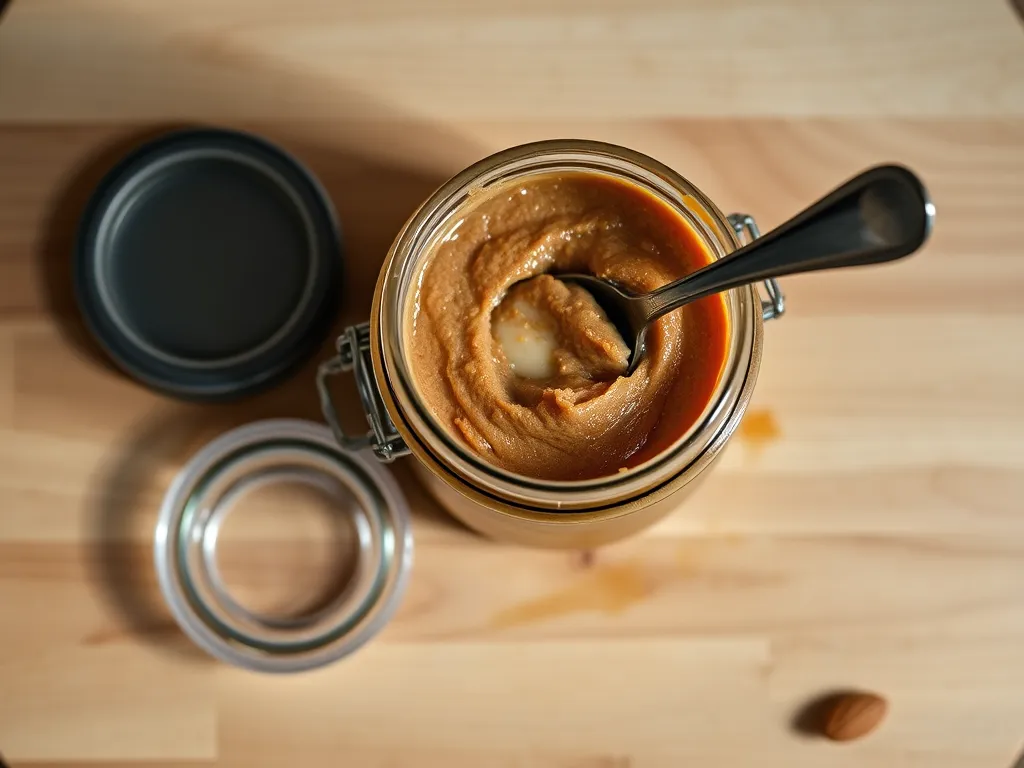
- Bitter or stale odor
- Dull brown appearance
- Grainy patches or dry clumps
- Off-flavor after stirring
- Toss if smell is off
- Discard if mold is present
Month 6 (Unsafe)
6 months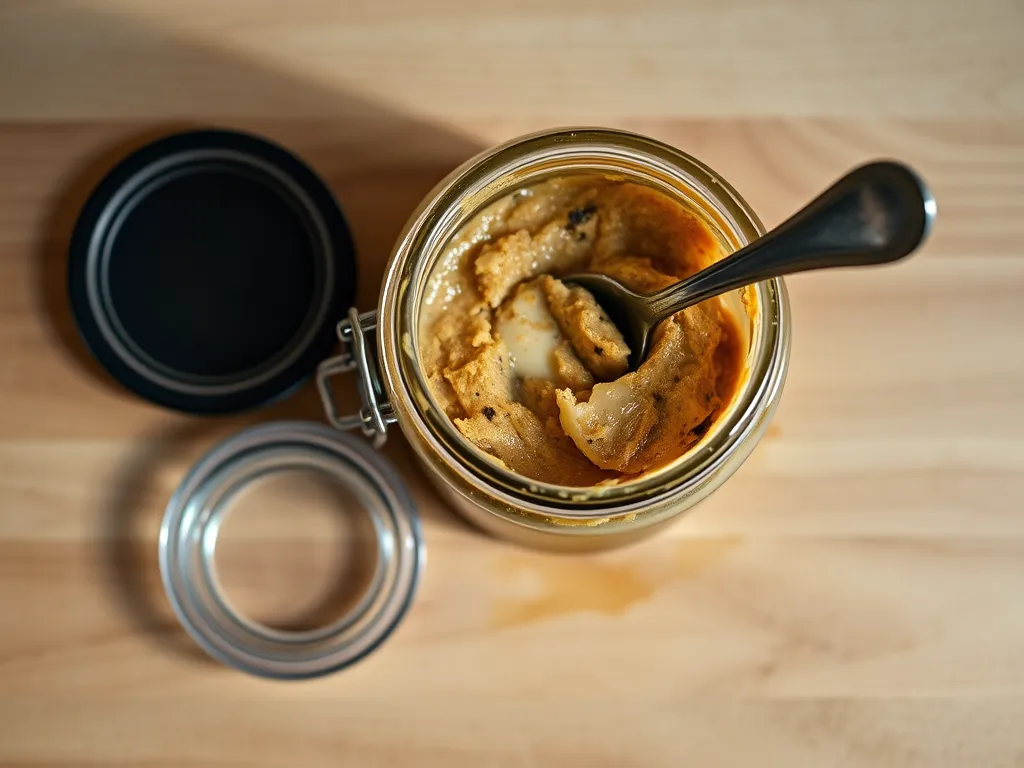
- Visible mold spots
- Sharp, rancid smell
- Complete separation of liquid and crust
- Patchy discoloration
- Discard immediately
- Toss the entire jar
Common questions
Does almond butter need to be refrigerated after opening?
Yes. Refrigerating almond butter after opening is the most effective way to slow oil oxidation and preserve flavor, helping it last for its full 3–5 month refrigerated shelf life.
Is oil separation a sign that almond butter has gone bad?
No. Oil separation is a natural occurrence in nut butters, especially natural varieties. It is not an indicator of spoilage; instead, look for mold or a bitter, paint-like smell.
How can I tell if my almond butter has expired?
Check for a sharp, stale, or bitter odor rather than a pleasant nutty scent. Visible mold or a significant change in taste are definitive signs that the almond butter should be discarded.
Can I freeze almond butter to make it last longer?
You can freeze almond butter, but this often alters the texture and consistency upon thawing. For optimal quality, refrigeration is recommended for use within 3–5 months.
Is it safe to eat almond butter after 5 months in the fridge?
While it may be safe if stored perfectly, the risk of rancidity increases significantly after 5 months. If the butter smells stale or tastes bitter, do not consume it.

Almond butter stays fresh for 3–5 months in the refrigerator when kept clean and sealed. Toss the jar as soon as the nutty aroma turns bitter or stale.